
Ebola outbreak in DR Congo
The Ebola outbreak in DR Congo (Democratic Republic of Congo) continues to escalate, with health authorities reporting over 1,000 confirmed cases and more than 250 deaths as of late June 2026 . The outbreak, which was declared on May 15, is now one of the largest and fastest-growing Ebola epidemics ever recorded in the country .
Rapid Spread and Alarming Numbers
The virus has spread across 31 health zones in three eastern provinces: Ituri, North Kivu, and South Kivu . Ituri province remains the epicenter, accounting for over 91% of confirmed cases . The number of confirmed cases increased more than eightfold in a matter of weeks, from 63 to 515 between May 22 and June 6 . The World Health Organization (WHO) has assessed the risk in the DRC as “very high” at the national level . A doctor who had been working at an Ebola treatment center later tested positive for the virus in France after passing through Kinshasa, raising fears about the potential spread to the capital city of 18 million people .
A Rare and Dangerous Strain with No Vaccine
This outbreak is caused by the Bundibugyo Ebola virus, a rarer strain of the virus for which there is currently no approved vaccine or specific treatment . This is a critical difference from major past outbreaks, like the 2014-2016 West Africa epidemic and the 2018-2020 outbreak in DRC, which were caused by the Zaire virus. For the Zaire virus, vaccines and effective treatments exist . However, the current lack of approved countermeasures for the Bundibugyo virus means health workers are left with only supportive care (like fluid replacement and oxygen) and public health measures to fight the disease . The estimated fatality rate for this strain is between 25 and 40 percent . The current outbreak has already surpassed the burden of the two previously known outbreaks caused by this strain — it is nearly five times the size of the 2007 outbreak in Uganda and 17 times that of the 2012 outbreak in the DRC .
Key Challenges Hindering the Response
Health officials and aid agencies have identified several critical challenges undermining efforts to contain the outbreak:
- Weak Contact Tracing: Contact tracing remains far below the required levels. In Ituri, authorities have listed about 5,000 contacts out of an expected 24,000, and only a limited share of those are under active follow-up . The contact-tracing rate has reportedly been as low as 55-64% , well below the 95% target. MSF has warned that the outbreak is “outpacing the response effort,” with “dangerous gaps” in surveillance, diagnosis, and contact tracing . Without robust contact tracing, community transmission is likely to continue .
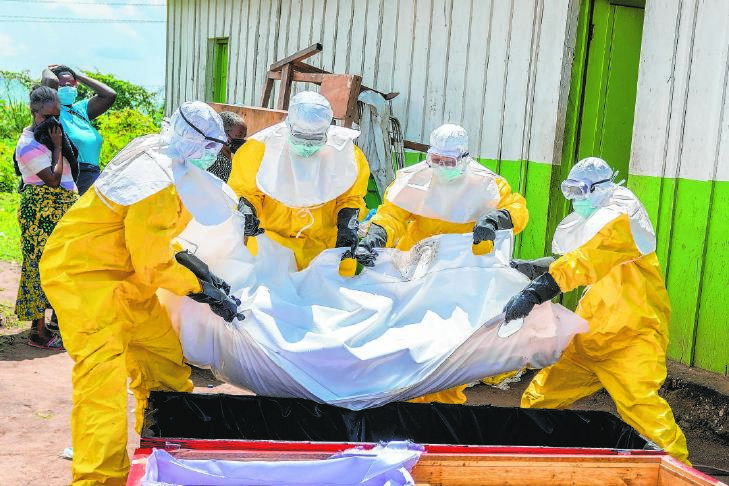
- Insecurity and Armed Conflict: The outbreak is unfolding in one of the most volatile regions in Africa, with many armed groups operating, including the M23 rebel group which is in control of large parts of North and South Kivu . Ongoing conflict restricts the movement of surveillance teams, hinders the deployment of rapid response teams, complicates contact tracing and safe burials, and puts health workers at risk . The Africa CDC has called for a ceasefire to allow health workers to reach communities.
- Community Mistrust and Misinformation: Some communities do not believe Ebola exists, with rumors and misinformation spreading since the start of the outbreak . This mistrust complicates safe burials, as families have attempted to recover bodies from burial teams, and community resistance has been a persistent obstacle . This is compounded by the fact that many communities in the east have been exposed to Ebola before, but this new strain is different and has no vaccine, making it harder to explain the need for new containment measures .
- Healthcare Worker Infections and Supply Shortages: At least 75 health workers are among confirmed cases, with 17 deaths reported, pointing to gaps in infection prevention and control in healthcare settings . Officials have also highlighted a shortage of basic protective equipment, including gloves and masks, increasing risks for frontline medical staff .
- Funding Gaps: While African states and partners pledged around $910 million, only $90 million has been disbursed so far . The DRC’s health minister has also highlighted a funding shortfall of at least $21.5 million . The DRC government has also announced a €20 million budget allocation in an attempt to curb the spread .
The Human Cost and Vulnerable Populations
The outbreak has had a devastating impact on vulnerable populations, particularly children. At least 52 children, including 16 toddlers and infants, have contracted Ebola, with 19 confirmed dead . Children aged 14 or under are more than twice as likely to die after contracting Ebola as patients aged 15 to 44 . The UNFPA has also warned that death rates among pregnant women infected with Ebola have been as high as 90% .
Displaced persons are particularly at risk as the virus moves through densely populated camps. At the Kigonze displacement camp in Bunia, officials reported that 10 people died last week under unusual circumstances . The United Nations refugee agency has expressed deep concern, warning that an epidemic spreading among the more than 2 million displaced people in the region would be a “real catastrophe” .
Regional and Global Risk
The virus has spread beyond the DRC, with Uganda confirming 19 cases and two deaths . The WHO has assessed the risk for countries sharing land borders as high, though the global risk remains low .
The AfricanaWeb Perspective
The Ebola outbreak in the DRC is a stark reminder of the complex challenges facing public health in Africa. This particular outbreak—driven by a dangerous virus with no vaccine, in a region already battered by conflict and displacement—is a crisis on multiple fronts. It underscores that the global health infrastructure is still not adequately prepared for threats that differ from the ‘known’ ones, and that the international community’s response must be commensurate with the scale of the emergency, not just the ease of access. As MSF has warned, the window for action is narrowing, and the need for urgent, coordinated action has never been clearer.