When we think of great cavalry forces in history, we often imagine the Mongols of Genghis Khan or the knights of medieval Europe. But in West Africa, the Oyo Empire built a cavalry force that was the terror of the region—an army of horsemen whose speed, skill, and spectacle made them legendary .
Rise of the Oyo Empire
The Kingdom of Oyo emerged around 1300 A.D., in what is today southern Benin and western Nigeria . Initially a minor state, Oyo was conquered by its northern neighbours, the Nupe, around 1535 CE, who held it until the Oyo kings regained control around 1610 CE . This setback proved temporary. Oyo quickly became a trans-Saharan trade centre, trading in salt, leather, kola nuts, ivory, cloth, and slaves .
The kingdom’s location in the savannah north of the tropical forests gave it a distinct advantage: it was relatively free from tsetse fly infestation, which in turn made it easier to raise healthy horses . The excellence of Oyo’s horses made them their most famous commodity .
The Horsemen of Oyo
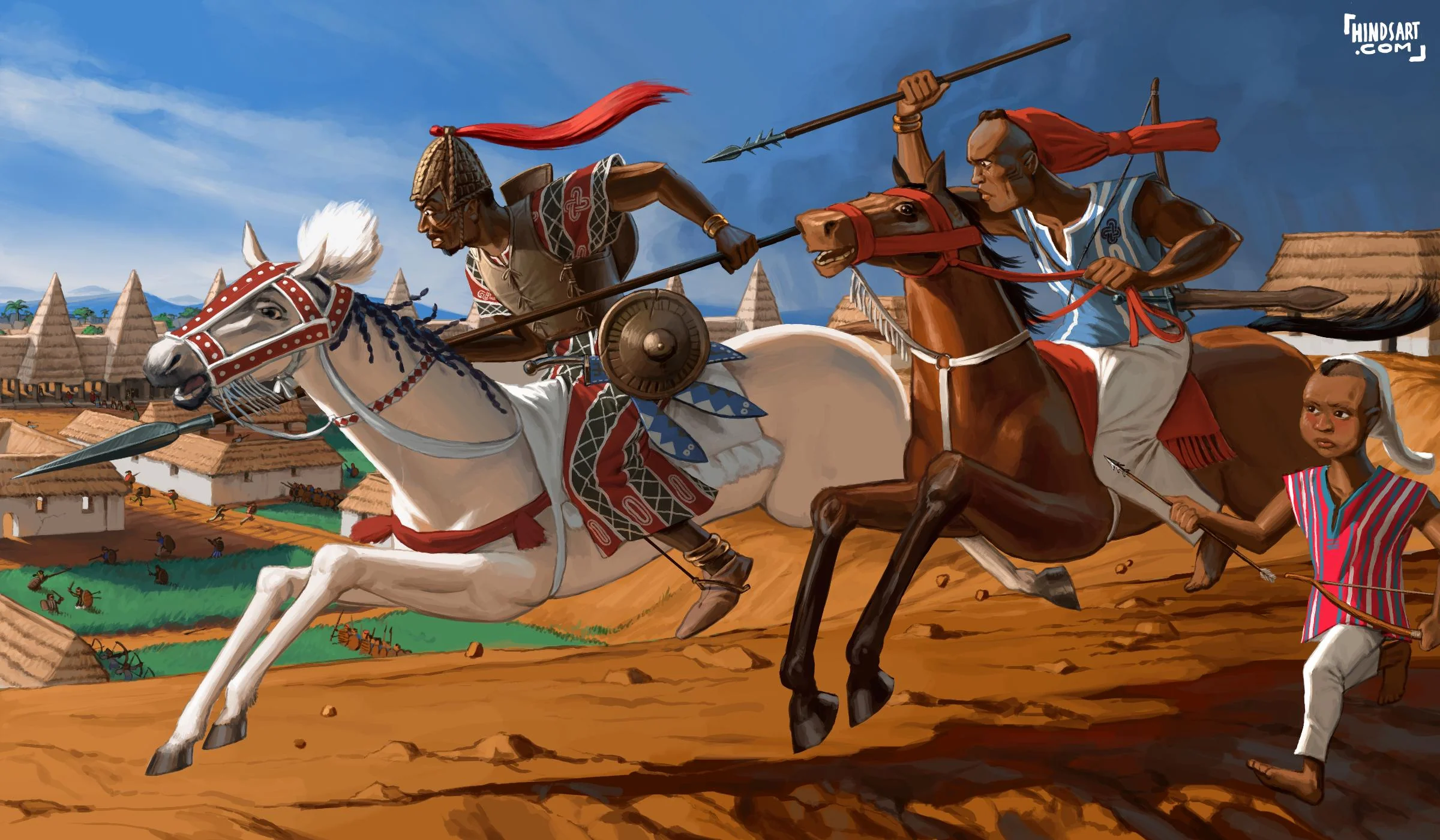
The wealth of the Oyo Empire came from tribute paid by surrounding kingdoms . With such wealth, the kingdom invested heavily in its military, particularly in forming a skilled cavalry . These cavalrymen were the backbone of the Oyo military, known for their equestrian skill, bravery in battle and striking appearance . They had no peers among the surrounding kingdoms in terms of their mobility and speed. At its peak, the cavalry had 100,000 horsemen .
The Horsemen of Oyo wore elaborate, dramatic battle attire with brightly coloured robes and headdresses and were armed with lances, swords and shields . Their horses were trimmed in feathers, elaborate decorations and heavy armour. The sight of the Horsemen of Oyo charging into battle was said to have been terrifying and awe-inspiring .
Alaafin Orompoto: The Queen Who Revolutionised Oyo’s Military
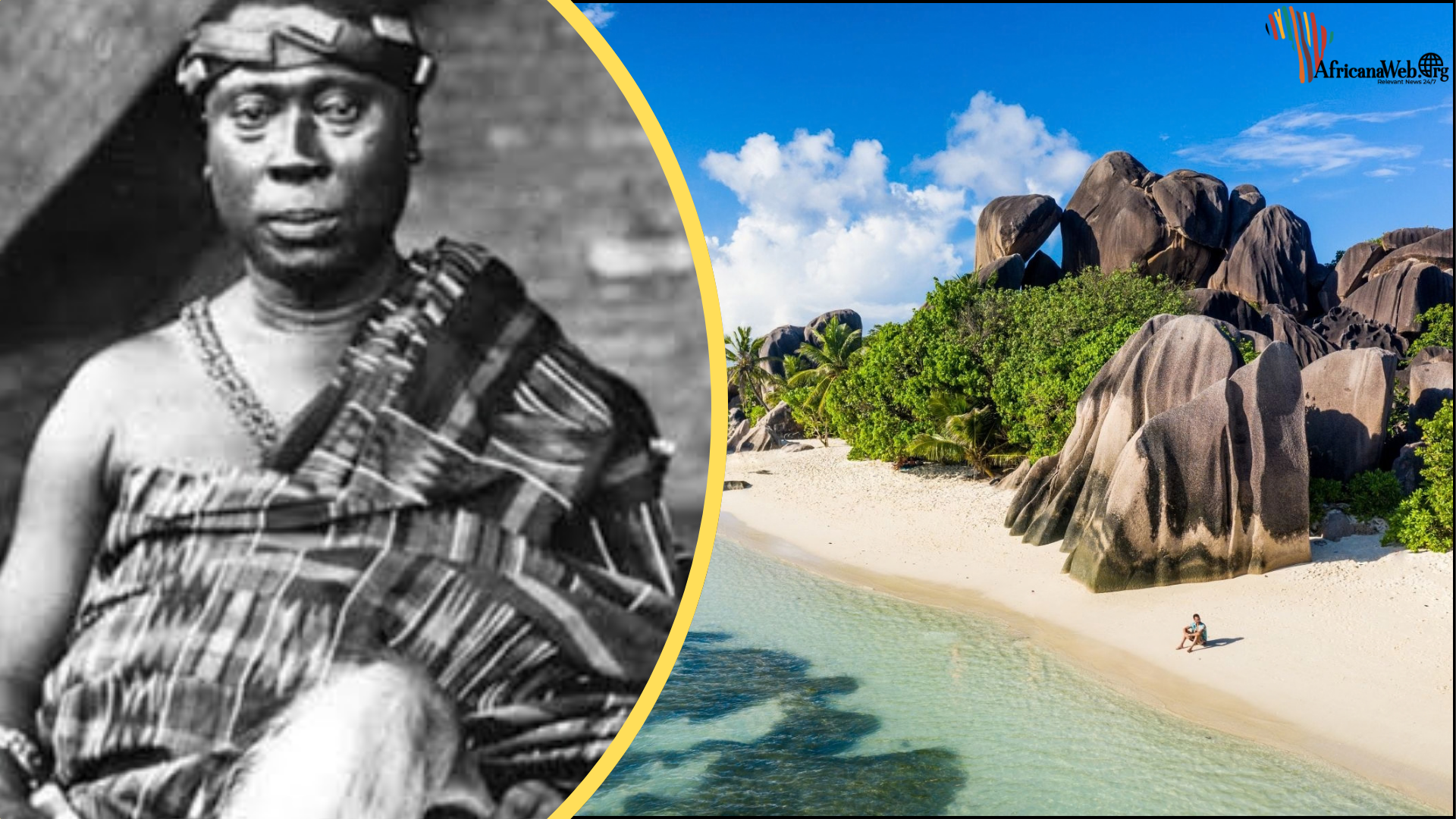
One of the most remarkable figures in Oyo history was Alaafin Ajiun Orompotoniyun, the only female Alaafin of Oyo . According to historical accounts, when her uncle, Alaafin Eguguoju, died without a male heir, Princess Ajiun stepped up and, against all tradition, became king. Her reign (c. 1555–1562) was transformative .
Orompoto introduced cavalry to the Oyo military, a feat believed to be why Oyo became the largest empire in Yoruba history. In 1557, she reportedly travelled as far as Timbuktu to import horses for her specialised cavalry. She may also have employed a thousand Borgu archers to shoot poisoned arrows from horseback .
Her military innovations did not stop there. According to legend, she kept her foot soldiers in front and cavalry behind in battles. Riders tied large leaves to the horses’ tails which swept the ground to cover their tracks—a brilliant deception tactic . In 1555, when the Nupe retaliated against Oyo, Orompoto’s formidable cavalry defeated them decisively. Her renowned cavalry and military strategy distinguished her in subsequent battles, making her one of the most influential Alaafin of the Oyo empire. She died in the Battle of Ilayi in 1562 .
Read Also: Queen Nzinga: The Warrior Queen Who Defied Portuguese Colonialism
Expansion and Dominance
By the early 18th century, Oyo had turned away from its traditional rivalry with the Nupe and Borgu and began using its cavalry to assert control over the trade routes through the open country southwestward to the coast . A measure of control was also asserted over other Yoruba peoples in the forest, and a boundary was established with the Kingdom of Benin .
The Oyo Empire’s expansion brought it into direct conflict with the Kingdom of Dahomey. Between 1724 and 1734, Dahomey enforced its militant, authoritarian rule over the Slave Coast, a development that threatened Oyo’s control of trade . This sparked continual warfare on the Slave Coast from 1726 to 1748, culminating in Oyo suzerainty over Dahomey .
The Oyo Empire’s military success was not solely due to the cavalry, however. The army was a well-rounded fighting force, with archers and infantry providing support . This combined arms approach made them a formidable opponent.
The Dahomey Wars: A Test of Strength
Despite their formidable reputation, the Horsemen of Oyo were not invincible. The Dahomey Wars exposed some of the cavalry’s weaknesses . Dahomey warriors, equipped with firearms, discovered that the sound of gunshots frightened the Oyo horses, disrupting their charges . Additionally, the Dahomey built fortifications and trenches that neutralised the cavalry’s effectiveness .
The Oyo were forced to adapt their tactics and rely more on infantry in certain situations . It took 11 invasions, but the Oyo, largely on the strength of its cavalry, defeated the Dahomey warriors in 1748 .
The war had profound global consequences. The military training of many Oyo and Dahomey soldiers who were captured and sold as slaves was pivotal in the success of the Haitian Revolution . Skilled commanders such as Toussaint Louverture and Jean-Jacques Dessalines capitalised on the military training of these now-freed slaves to defend the revolution against European armies .
The Limitations of African Cavalry
While the Oyo cavalry was decisive in many battles, the presence of the tsetse fly in much of sub-Saharan Africa meant that the large massed cavalry charges that characterised Eurasian warfare could not happen in much of Africa . This had a profound impact on the evolution of infantry tactics. In Eurasia, massed formations were used to counter cavalry charges. In Africa, however, the use of ranged archers necessitated dispersed infantry formations, which proved useful for diminishing the effectiveness of musket volley fire . Oyo’s tactics were adapted to its environment—a testament to the strategic thinking of its leaders.
The Decline of the Oyo Empire
The Kingdom of Oyo endured, in various degrees of power and influence, for more than 500 years . By the late 18th century, the empire held considerable influence over not just most of the other Yoruba-speaking kingdoms, but also most of the nearby African states .
However, by the early 19th century, the empire’s decline had begun. Internal political infighting eroded the power of the king to the point that he could no longer command the allegiance of his chiefs . The empire was eventually conquered by the militant Fulani Muslims from Hausaland in the northeast, and Oyo collapsed into smaller states .
The Legacy of the Horsemen
Today, the Oyo Empire is best remembered for its time of great wealth and influence—and for its horsemen, who had a lasting impact on the history of the continent . Artistic evidence of their power and prestige can still be seen in artefacts like the magnificent brass roof pillars from the palace at Old Oyo, which depict elaborately detailed horsemen and demonstrate the cultural sophistication of the empire .
The AfricanaWeb Perspective
The Horsemen of Oyo are a powerful reminder that African military history is rich with innovation, strategy, and spectacle. Their story challenges the narrative of a passive or primitive Africa before European colonisation . The Oyo Empire built one of the most formidable cavalry forces in history—not by copying others, but by adapting to their environment and developing tactics that suited their terrain and resources . Their legacy reminds us that Africa’s past is not one of weakness, but of strength, ingenuity, and resilience. The Horsemen of Oyo rode through history—and their hoofbeats still echo today.