
The UNGA 81 Africa Push
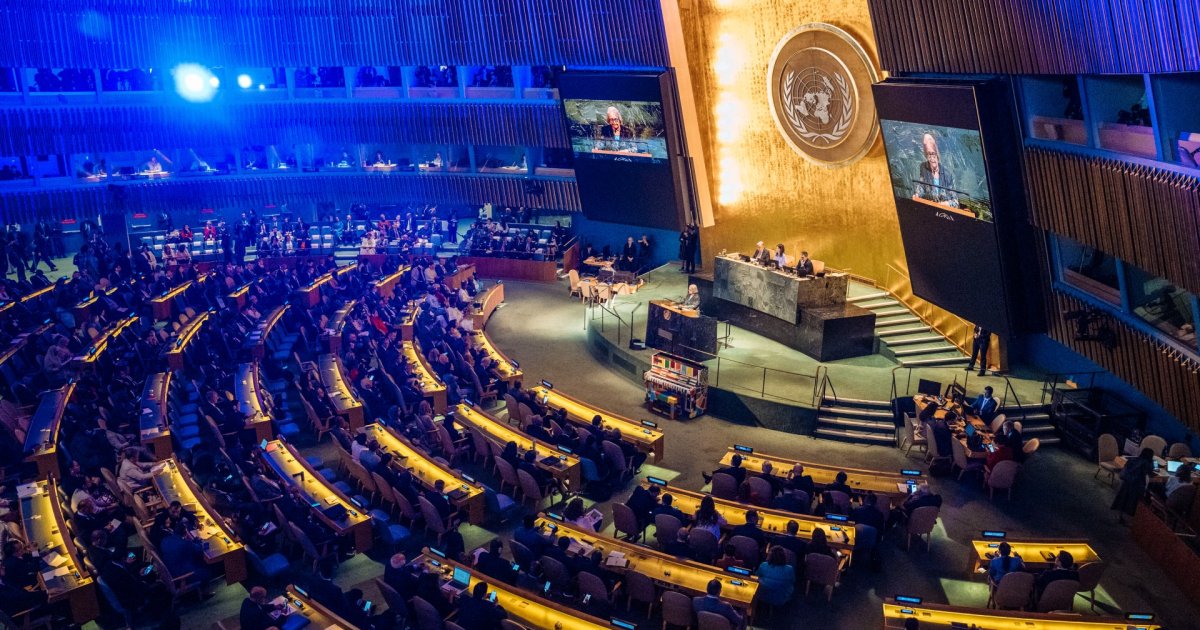
The 81st session of the United Nations General Assembly (UNGA 81) is underway in New York, and Africa is not just attending—it is setting the agenda. Under the theme “Restoring Trust, Managing Transformation: A United Nations that Delivers for All,” global leaders are gathering to tackle the world’s most pressing crises. For Africa, this session represents a critical opportunity to push for systemic reforms, demand historical justice, and reposition the continent as a shaper of the global order, not just a subject of it.
The General Debate, where heads of state and government deliver their addresses, runs from September 22 to 26, and September 28, 2026 .
A Presidency Focused on Trust and Transformation
The President of the General Assembly, Khalilur Rahman of Bangladesh, has outlined six key priorities for the 81st session, many of which align directly with Africa’s aspirations :
-
Peace and Security: Strengthening conflict resolution and peacebuilding efforts.
-
Sustainable Development: Accelerating the 2030 Agenda, with a focus on closing financing gaps and reforming the international financial architecture.
-
Climate Action: Advancing climate finance, adaptation, and resilience, including the operationalization of the Loss and Damage Fund.
-
Human Rights: Upholding the protection of human rights, including the rights of refugees and migrants.
-
Technology and AI: Ensuring that technological transformation serves people everywhere and is governed inclusively.
-
UN Reform and Multilateralism: Restoring trust in the UN and making the institution “fit for the future.”
These priorities are not just abstract goals. For Africa, they translate into concrete demands: fairer trade rules, climate finance that actually reaches vulnerable communities, and a Security Council that reflects the world as it is today—not as it was in 1945.
Africa’s Central Role at UNGA 81
This session is particularly pivotal for Africa, with the continent’s priorities featuring prominently on the global stage.
A Unified African Voice for Reform
The Chairperson of the African Union Commission, Mahmoud Ali Youssouf, is in New York to advance Africa’s agenda. A central demand is the long-overdue reform of the UN Security Council, including permanent African representation. The continent is also pushing for reforms to the international financial architecture to give African nations a fairer voice and better access to financing for development.
This push is not new. For decades, African leaders have argued that the Security Council’s current structure—with five permanent members holding veto power—is a relic of a post-war era that did not include Africa. The Ezulwini Consensus, adopted by the African Union in 2005, called for at least two permanent seats with veto power for Africa. That demand remains unmet. UNGA 81 is another opportunity to press the case.
Leading the Charge for Reparatory Justice
Ghana, under President John Dramani Mahama, has been at the forefront of the global push for reparations for the transatlantic slave trade. Building on the historic UN resolution passed earlier this year that declared the slave trade the “gravest crime against humanity,” Africa is expected to continue its call for concrete action on reparatory justice at UNGA 81.
The resolution, adopted in March 2026, marked a significant shift in how the international community acknowledges the transatlantic slave trade. It called on member states to engage in dialogue on reparatory justice, including formal apologies, restitution, and measures to address systemic racism. But turning recognition into action remains the challenge. At UNGA 81, African leaders are expected to press for a clear roadmap—one that moves beyond symbolism to tangible outcomes.
Economic and Industrial Transformation
The session will also spotlight Africa’s economic transformation. The UN General Assembly recently proclaimed the Fourth Industrial Development Decade for Africa (IDDA IV) for 2026-2035, a major commitment to accelerate the continent’s industrial development. Africa is expected to use this platform to advocate for investment in its industrial capacity, youth, and innovation.
IDDA IV builds on previous decades of industrial development efforts, but with a sharper focus on value addition, technology transfer, and intra-African trade. The African Continental Free Trade Area (AfCFTA) is a key part of this vision, creating the world’s largest free trade area by number of countries. If fully implemented, it could boost intra-African trade by over 50% and help the continent move away from its reliance on raw material exports.
Showcasing Opportunities, Not Just Problems
Alongside the official proceedings, UNDP and other partners are hosting a series of events under the “Africa at UNGA 81” umbrella. These events are designed to shift the narrative from problems to opportunities, focusing on investing in Africa’s youth, innovation, and women’s empowerment.
This narrative shift matters. For too long, Africa has been discussed in terms of crises—conflict, poverty, disease. While those challenges are real, they are not the whole story. Africa is home to the world’s youngest population, a rapidly growing tech sector, and a cultural influence that spans the globe. UNGA 81 is a chance to tell that story.
The Global Context
UNGA 81 is taking place against a backdrop of multiple global crises: the war in Ukraine, the conflict in Gaza, rising tensions in the Sahel, and the accelerating climate emergency. The theme of “restoring trust” reflects a broader anxiety—that multilateralism itself is under strain.
For Africa, this moment is both a challenge and an opportunity. The continent is disproportionately affected by crises it did not create—climate change, global inflation, and the lingering effects of colonialism. Yet it is also positioned to play a leadership role in shaping solutions. From renewable energy to digital innovation, Africa is not waiting for the world to save it. It is building its own future.
What to Watch For
The high-level General Debate begins on September 22. As per tradition, the President of Brazil will deliver the first address, followed by the President of the United States as the host nation.
All eyes will be on how Africa’s leaders articulate the continent’s demands for a fairer, more representative global system—and whether the world is ready to listen.