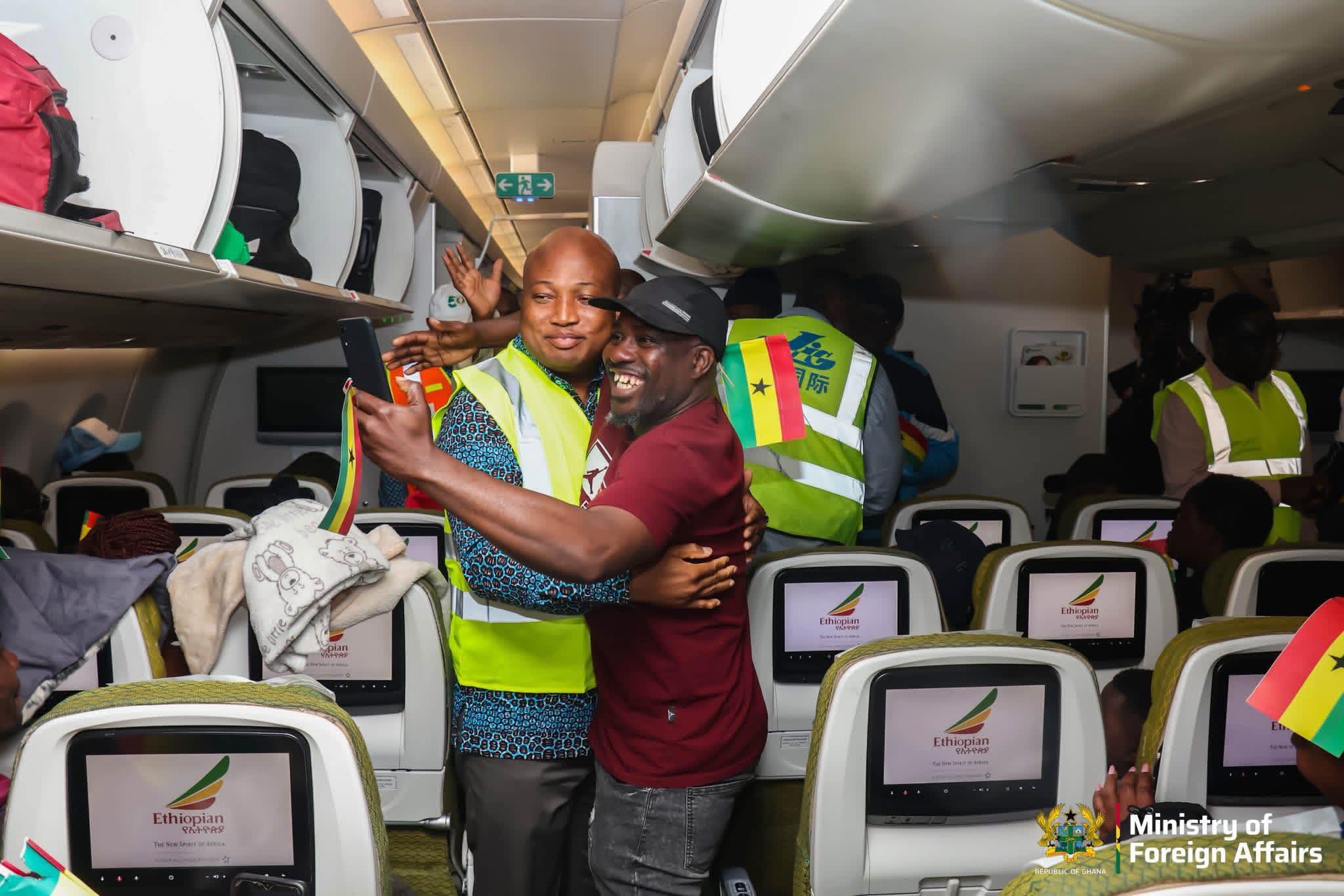
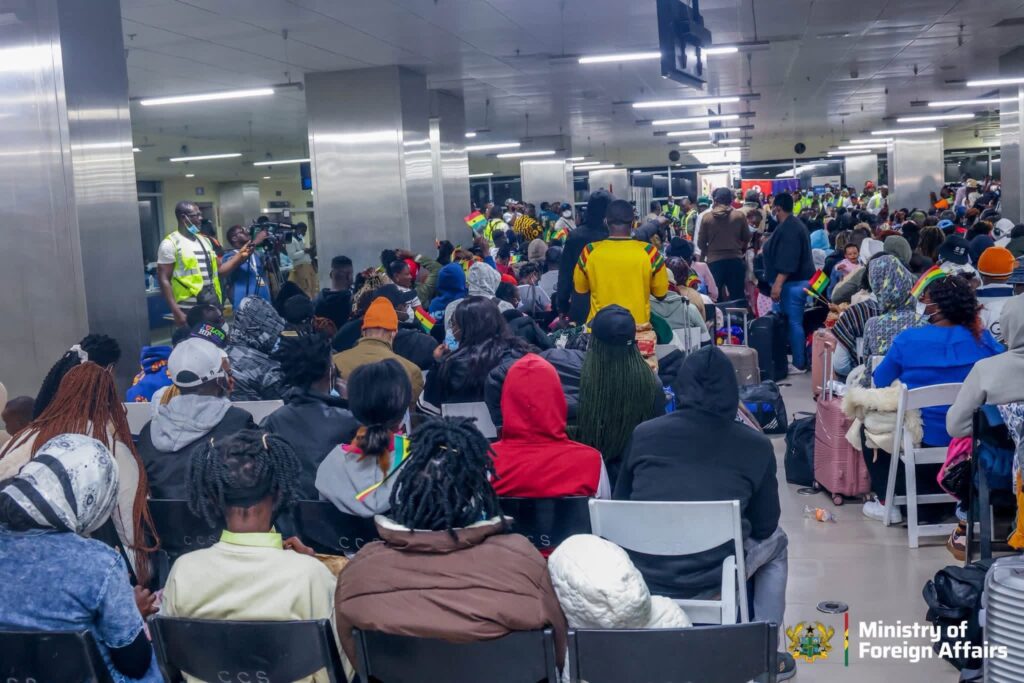
The second batch of Ghanaian evacuees has arrived in Accra as the government’s ongoing repatriation exercise from South Africa continues. The first flight of this batch touched down on the night of June 7, carrying approximately 345 citizens who opted to return following renewed xenophobic violence and anti-immigrant demonstrations in parts of South Africa.
Why Are Ghanaians Leaving South Africa?
Since late May 2026, South Africa has witnessed a significant surge in anti-immigrant violence, largely driven by vigilante groups and nationalist organizations. Protesters, operating under the banners of “March and March” and Operation Dudula, have accused foreign nationals of straining public services, increasing crime, and taking jobs in an economy with an unemployment rate exceeding 30%.
The situation escalated dramatically when these groups issued an unofficial ultimatum for all undocumented immigrants to leave the country by June 30. This threat triggered widespread unrest, looting, and the forced closure of foreign-owned businesses in major cities like Johannesburg and Durban, as well as coastal towns.
Read Also: Africa Seeks Partnerships, Not Sympathy — President Mahama Tells Global Investors
The Human Toll
Reports indicate that the violence has had deadly consequences. While official figures vary, the government of Mozambique has confirmed the deaths of five of its citizens, with South African police investigating two specific homicides in the town of Mossel Bay.
In response to the escalating danger, multiple African nations, including Ghana, Nigeria, Kenya, and Malawi, have begun repatriating their citizens. Ghana’s government, led by Foreign Minister Samuel Okudzeto Ablakwa, acted swiftly. After lodging formal diplomatic protests and petitioning the African Union, it initiated a mass evacuation.
The first flight arrived on May 27 with 300 evacuees, and this recent batch of 345 is part of a larger effort to bring home over 1,500 Ghanaians who felt their lives were threatened. President John Dramani Mahama confirmed that nearly 200 displaced citizens sought refuge at Ghana’s High Commission in Pretoria at the peak of the crisis.
Foreign Affairs Minister Samuel Okudzeto Ablakwa, who received the returnees at the airport, announced that roughly 200 jobs had already been secured. Leading the effort is businessman Ibrahim Mahama’s Engineers and Planners, which has offered 100 jobs. Telecommunications firms AirtelTigo and Telecel have also pledged support, with several other corporate CEOs expressing further interest.
“I am so impressed that already, about 200 jobs have been secured for you and leading the path is Mr. Ibrahim Mahama’s Engineers and Planners. They have offered 100 jobs,” Ablakwa told the returnees. “There are many other CEOs calling that they are going to be part of this programme.”
AfricanaWeb Perspective
This story is not just about evacuation or job numbers. It raises deeper questions about African solidarity, economic pressure, and human dignity.
First, the crisis itself is a reminder that xenophobia is not a solution to unemployment. South Africa’s economic struggles are real, but targeting foreign nationals — many of whom have lived and worked in the country for years — is neither just nor effective.
Second, Ghana’s response offers a model: swift diplomatic action, corporate partnership, and a focus on reintegration. The involvement of Ibrahim Mahama, AirtelTigo, Telecel, and other CEOs shows that the private sector can play a meaningful role in times of crisis.
Finally, the diplomatic friction between Ghana and South Africa matters. How this is handled — quietly or publicly — will set a tone for how African nations manage similar crises in the future.
At AfricanaWeb, we believe African problems deserve African solutions. Not sympathy. Not spectacle. But strategic, humane, and mutually respectful action. This evacuation is one example. The real test will be how these returnees are supported six months or a year from now.