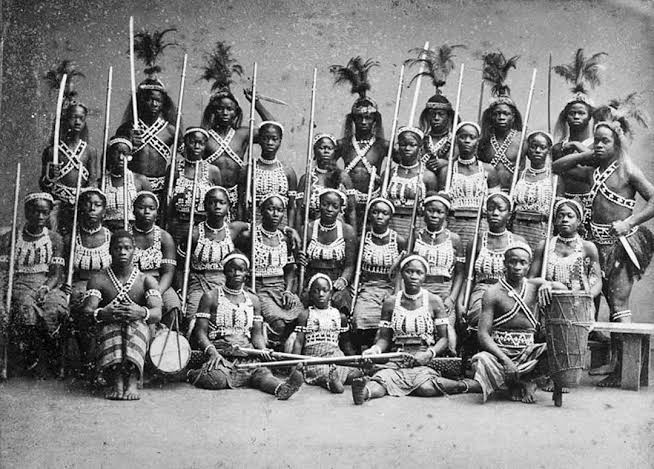
In the dense forests of 17th-century West Africa, a remarkable military force emerged that would capture the imagination of the world. They were the Dahomey Amazons—the only all-female military regiment in modern history . Known to themselves as the Mino (“Our Mothers”) or Ahosi (“King’s wives”), these warriors defied convention, shattered expectations, and became one of the most feared fighting forces on the continent .
The Kingdom of Dahomey: A Warrior State
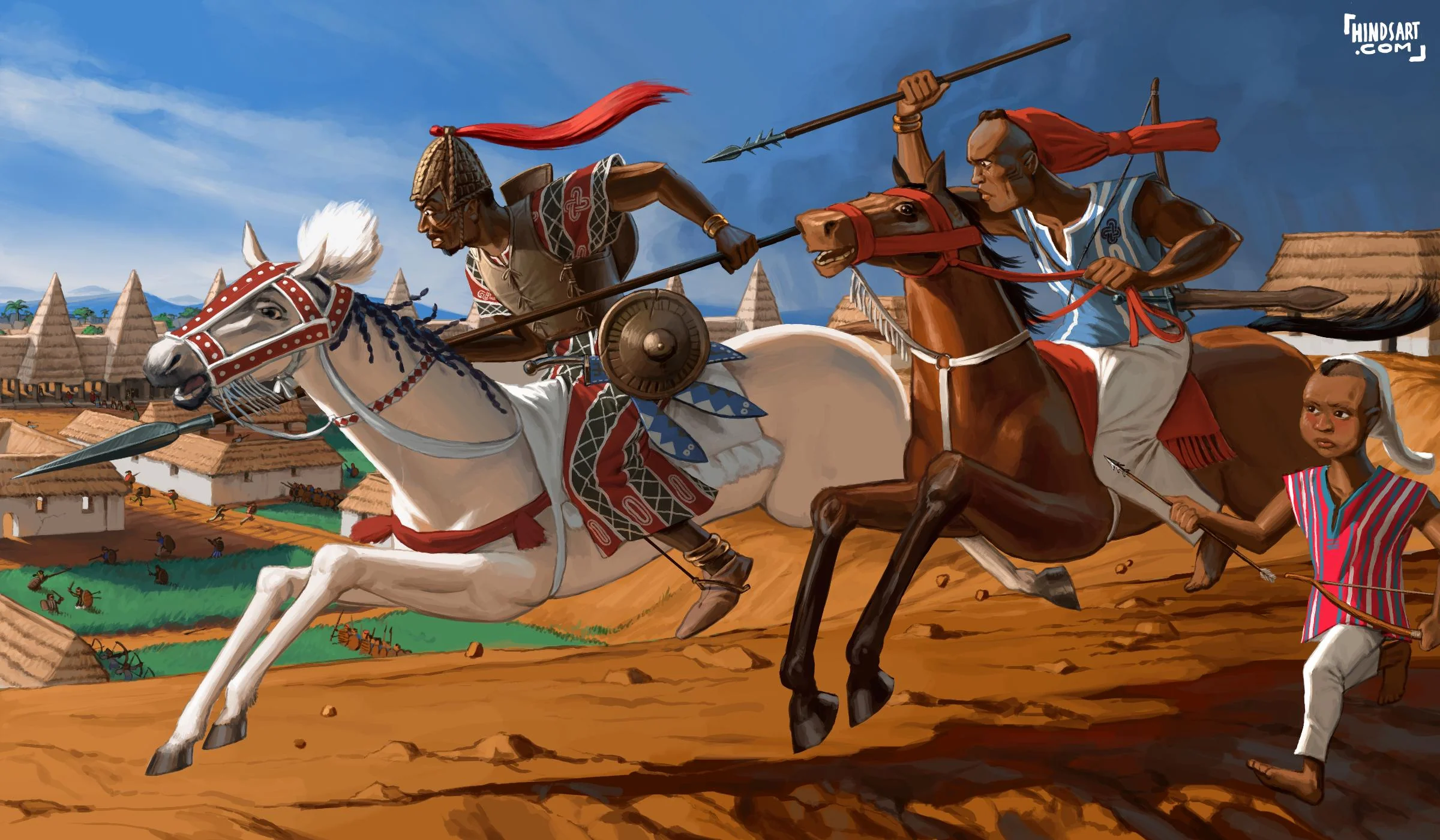
The Kingdom of Dahomey flourished from approximately 1600 to 1894 in what is now the Republic of Benin . Founded by the Fon people on the Abomey Plateau, the kingdom grew into a regional power through military conquest and the control of the Atlantic slave trade .
Dahomey was a highly militaristic society, constantly organized for warfare. The kingdom’s economy was built on conquest and slave labor, with captives either sold to European traders or kept to work on royal plantations . At the heart of Dahomey’s military machine was a standing army that included a contingent of female soldiers who would become legendary .
Origins of the Amazons
The exact origins of the Dahomey Amazons are somewhat shrouded in history, but several traditions exist. The group is said to have been originally started by King Houegbadja (ruled 1645–1685), the third King of Dahomey, as a corps of elephant hunters called the gbeto .
Another tradition credits Houegbadja’s daughter, Queen Hangbe (ruling 1716–1718), with establishing a female royal bodyguard. European merchants documented their presence, and according to tradition, her brother and successor King Agaja successfully used them in Dahomey’s defeat of the neighbouring Kingdom of Savi in 1727 .
However, it was under King Ghezo (ruling 1818–1858) that the Amazons reached their peak. Ghezo placed great importance on the army, increasing its budget and formalizing its structure from a ceremonial unit into a serious professional military force .
Recruitment and Training
The women soldiers were recruited from various sources:
-
Foreign captives taken in war
-
Free Dahomean women, some as young as eight years old
-
Involuntary recruits—women sent to the army by their husbands or fathers who complained about their behaviour
Membership in the Mino was intended to hone aggressive character traits for the purpose of war. The women were not allowed to have children or be part of married life (though they were legally married to the king). Many were virgins, and the regiment had a semi-sacred status intertwined with Vodun beliefs .
The training was brutal and rigorous:
-
Intense physical exercise
-
Learning survival skills and indifference to pain and death
-
Storming acacia-thorn defences in military exercises
-
Executing prisoners as part of training
Jean Bayol, a French naval officer who visited Abomey in December 1889, witnessed a teenage recruit named Nanisca in a test of courage. She walked up to a bound prisoner and decapitated him with two strokes of her sword, then squeezed the blood off her weapon and swallowed it .
Serving in the Mino offered women the opportunity to rise to positions of command and influence. The Amazons were wealthy and held high status, often enjoying privileges such as tobacco, alcohol, and as many as 50 slaves per soldier . When they walked out of the palace, a slave girl carrying a bell preceded them, warning all males to get out of their path and look the other way .
Read Also: Queen Nzinga: The Warrior Queen Who Defied Portuguese Colonialism
Structure and Weapons
By the mid-19th century, the Amazons numbered between 1,000 and 6,000 women, accounting for about a third of the entire Dahomey army . Reports from visitors consistently judged the women soldiers as superior to their male counterparts in effectiveness and bravery in battle .
The women’s army consisted of several regiments :
| Regiment | Weapon | Role |
|---|---|---|
| Gbeto (Huntresses) | Spears, short swords | Originally elephant hunters |
| Gulohento (Riflewomen) | Long rifles, short swords | Formidable in close combat |
| Nyekplohento (Reapers) | Razor-sharp knives | Feared for their ability to slice a man in two |
| Gohento (Archers) | Bows and arrows | Hooked and poisoned arrows |
| Agbalya (Gunners) | Artillery (cannons, Krupp guns) | Operated the army’s heavy weapons |
The Amazons were structured in parallel with the army as a whole, with a centre wing (the king’s bodyguards) flanked on both sides, each under separate female commanders .
Wars and Campaigns
The Dahomey Amazons participated in numerous battles and campaigns:
-
Expansion of the kingdom—conquering Allada and Whydah
-
Resistance against the Oyo Empire—ending Dahomey’s tributary status in 1823
-
Wars against Abeokuta—suffered crushing defeats in 1851 and 1864
Their battles consisted mainly of conflicts within Africa against various kingdoms and tribes. It was customary that once an enemy was defeated, they would be killed or enslaved. Victims transported on the last ship known to have taken enslaved people to the United States, the Clotilda, reported that the Dahomey Amazons participated in their enslavement .
Conflict with France
The European encroachment into West Africa gained pace during the latter half of the 19th century. In 1890, King Béhanzin started fighting French forces in the First Franco-Dahomean War. European observers noted that the women “handled admirably” in hand-to-hand combat, but fired their flintlocks from the hip rather than from the shoulder .
The Amazons participated in one major battle: Cotonou, where thousands of Dahomeans charged the French lines and engaged the defenders in hand-to-hand combat. They were decisively crushed, with several hundred Dahomey troops being gunned down .
By the end of the Second Franco-Dahomean War (1892–1894), special units of the Amazons were assigned specifically to target French officers . French soldiers, particularly of the French Foreign Legion, were impressed by their “incredible courage and audacity” in combat .
During a battle at Adegon on October 6, 1892, the bulk of the Amazon corps were wiped out in a matter of hours in hand-to-hand combat after the French engaged them with a bayonet charge. The Dahomey lost 86 regulars and 417 Mino, with nearly all of those deaths inflicted by bayonets; the French lost only six soldiers .
Disbandment and Legacy
The troops were disbanded when the kingdom became a French protectorate in 1894 . Oral tradition states that some surviving Amazons secretly remained in Abomey, quietly assassinating French officers. Others pledged their services to protect Agoli-Agbo, brother of Béhanzin, disguising themselves as his wives to guard him .
The women faced difficulty adjusting to life as retired warriors. Many struggled to find new roles that gave them a sense of pride comparable to their former lives, and some displayed a tendency to start fights or arguments that frightened their neighbours .
The last known Dahomey Amazon, a woman named Nawi, died in November 1979, aged well over 100. In a 1978 interview, she claimed to have fought the French in 1892 .
The AfricanaWeb Perspective
The Dahomey Amazons stand as a testament to the power, courage, and capability of African women in the pre-colonial era. They challenged gender norms and became one of the most effective fighting forces of their time. Their story is one of resilience, discipline, and defiance in the face of European imperialism.
Today, their legacy lives on in popular culture, inspiring the Dora Milaje warriors of Wakanda in Marvel’s Black Panther and the 2022 film The Woman King starring Viola Davis . These contemporary representations remind us that the story of the Dahomey Amazons is not just history—it is a continuing source of inspiration for African identity and pride.