

Folklore in Africa is not merely entertainment—it is a sophisticated system of education that shapes character, transmits values, and preserves communal identity. As Enongene Mirabeau Sone observed, “societal values are embodied in and communicated by its system of education and that the education that a society offers its youth reflects the sum total of what is held dear in that society” . In many African societies, oral traditions—folktales, riddles, proverbs, and songs—serve as informal educational platforms that mould character and instil moral values like honesty, integrity, courage, and solidarity .
The Evening Fireside Tradition
The image of children gathered around a fire listening to stories from elders represents one of Africa’s most enduring educational traditions. In ancient and traditional African societies, older members of the community would gather children at the end of the day for “tales by moonlight” sessions aimed at guiding their moral decisions . These sessions were not merely entertainment—they were deliberate pedagogical tools designed to shape ethical conduct, identity, and communal values.
A study by Mdhluli and Masipa (2025) found that indigenous music in African folklore, including lullabies, folk songs, chants, and storytelling, serves as an effective cultural channel for promoting values like respect, communal living, honesty, and accountability . The study, based on Social Learning Theory and Afrocentric Theory, emphasizes learning by observation, engagement, and conformity with African worldviews .
Folktales as Vehicles of Moral Values
African folktales are created and developed in specific contexts by individuals, and they can now be experienced by readers in different locations through written collections . Each folktale illustrates a moral or a lesson, teaching young readers that one should develop a sense of community by helping one’s neighbours.
Read Also: The Stories Behind Ghana’s Traditional Dances- From Adowa Of The Akans To The Ewe’s Borborbor.
“The Treasure”: The Lesson of Hard Work
In the popular folktale “The Treasure,” a father tells his sons before dying that their inheritance is buried in his land. While digging for the treasure, the sons clear the weeds, plough the fields, plant seeds, and eventually harvest the crops. In the end, they realise that the “treasure” is the lesson that hard work is rewarding .
Ananse and the Crows: Resisting Oppression
In “Spider and the Crows” from Nelson Mandela’s anthology Favorite African Folktales, the spider Anansi uses his cunning to steal food from selfish crows during a great famine. While children might see Anansi as a clever trickster, adults recognise a deeper theme—resistance to oppression. The crows, who can fly to reach the only food during a famine, refuse to share with their community. Anansi’s actions, while deceptive, raise questions about survival and justice. As one analysis notes, readers must decide: “Is Anansi wrong for his actions?” .
“Agya Nimo the Rich Man”: Community and Reciprocity
In “Agya Nimo the Rich Man,” a wealthy man learns that one should develop a sense of community by helping one’s neighbours. When his wife dies and the villagers do not come to help but send gifts instead, Agya Nimo remembers the proverb, “The left hand washes the right hand and the right hand washes the left hand” .
Proverbs as Tools for Moral Formation 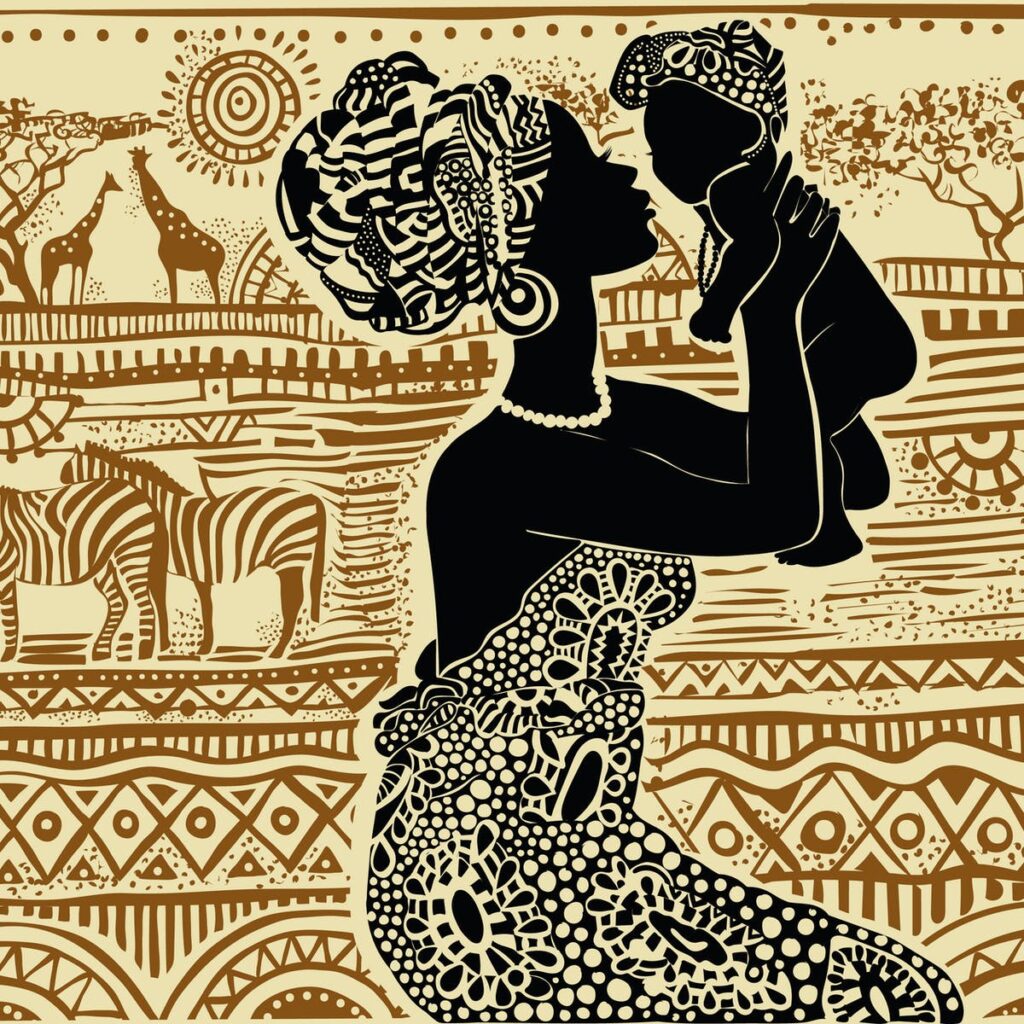
Proverbs are a powerful tool for education and moral formation in all sectors of society . As one scholar noted, “proverbs carry deep-rooted meanings, and they signify values, principles, morals and ethics for peaceful coexistence. The philosophical elucidations and the meaning embedded in proverbs does not easily change over time” .
The Didactic Power of Proverbs
Proverbs capture ethics and morality mainly as a personal responsibility. For instance, the Setswana proverb More mogolo go betlwa wa taola, wa motho o a ipetla—meaning “the greatest medicine is carved through divining bones, while that of a human is self-carving”—teaches that “a person chooses their own path in life” . This proverb is “powerful advice for the ethics of self-responsibility,” revealing “how individuals must make a choice for what they want to become” .
The Igbo of Nigeria refer to proverbs as “vegetables for eating speech” and “a palm oil with which words are eaten.” The Yoruba call them “horses for chasing missing words.” For the Zulu, “without proverbs, language would be but a skeleton without flesh, a body without a soul” . African beauty is reflected in language eloquence and proverbs: Monate wa Setswana o utlwala mo puong—”The beauty of Setswana is in its language” .
The Role of Indigenous Music
Traditional music genres, including lullabies, folk songs, chants, and storytelling, serve as informal educational platforms for African children, shaping their ethical conduct, identity, and communal values . However, modernization, urbanization, and the impact of Western media all contribute to a fall in its use .
Scholars advocate incorporating indigenous music into formal education curricula and community-based learning activities to promote cultural preservation and moral growth . There is a need for increased use of media and audio-visual tools to expand the knowledge and accessibility of indigenous African folktales in order to preserve ethnic, national and social identity as well as to provide a moral compass for children .
Decolonising Education Through Folklore
African proverbs can be used to decolonise theology and education by providing a framework for character education . As one theologian observed, “the best form of theologising might be collecting, creating, and reflecting on proverbs” . This character-based framework equips the learner to be knowledgeable about power, equity, ethics and morality, and to develop a conscience for social responsibility, as well as to embrace traditional notions of self-discipline, probity, and hard work .
The AfricanaWeb Perspective
African folklore is not a relic of the past—it is a living, breathing system of education that continues to shape identity and values. In a world increasingly disconnected from oral traditions, the preservation of folktales, proverbs, and indigenous music is an act of resistance and cultural affirmation. As scholars have noted, “African folklore is rich with moral and ethical instructions” . By engaging with these traditions, we do not just preserve the past—we build a future rooted in African wisdom and values.