
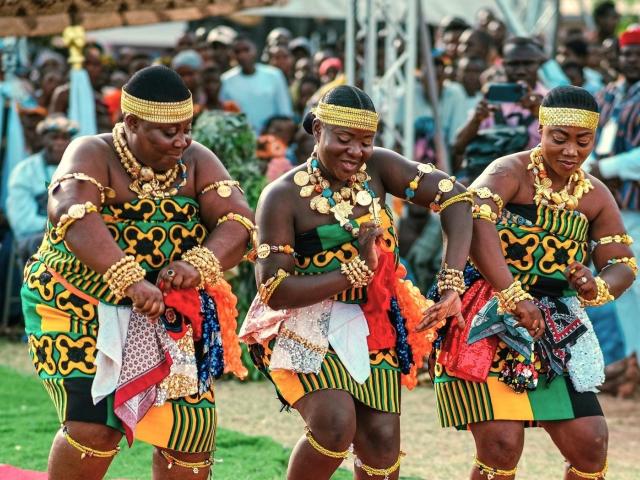
Ghana is often described as the “Gateway to Africa” — and for good reason . Across its 16 regions, the country is alive with festivals that celebrate heritage, honour ancestors, mark harvests, and strengthen community ties . Behind the colourful parades and drumming lies a deeper story of resilience, identity, and spiritual connection .
Here are five vibrant Ghanaian festivals that showcase the nation’s rich cultural tapestry.
1. Homowo – “Hooting at Hunger” (Greater Accra Region)
When: August/September
Where: Accra and other Ga towns
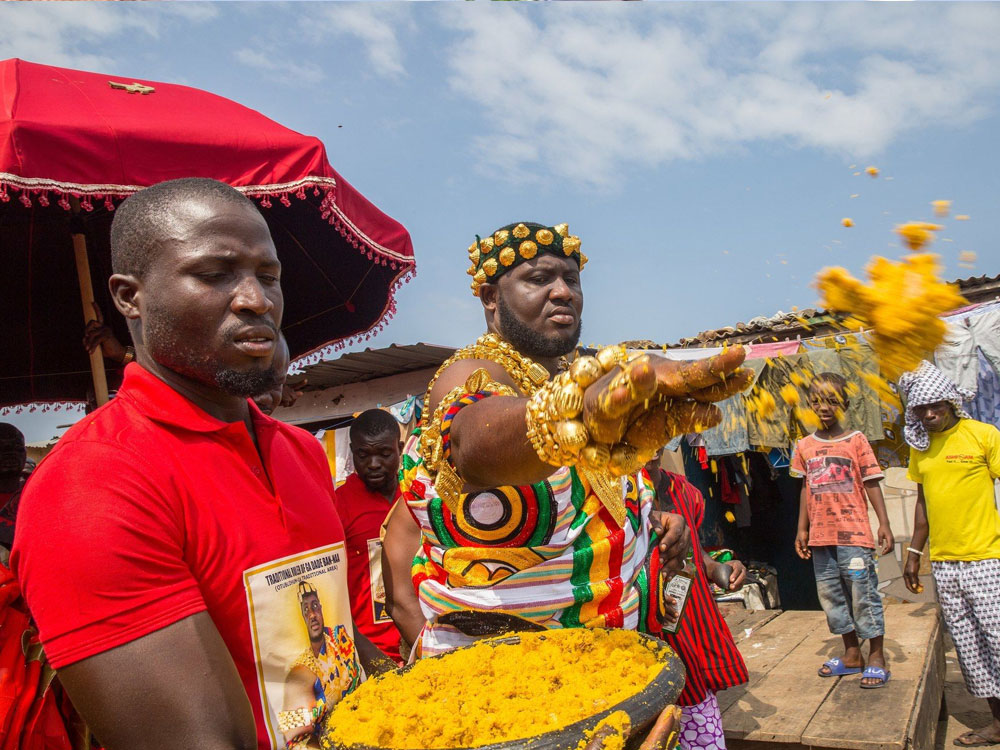
Homowo, celebrated by the Ga people, literally means “to hoot at hunger” . The festival commemorates a devastating famine that the Ga people once endured — and their triumph over it when their harvests finally succeeded .
The festival features the sprinkling of kpokpoi, a traditional corn meal, which represents gratitude, remembrance, and communal healing . It is a time for communities to come together, celebrate resilience, and give thanks for abundance .
What to expect: Drumming, dancing, colourful processions, and the iconic sprinkling of kpokpoi at family homes.
2. Aboakyer – The Deer Hunt (Central Region)
When: First Saturday in May
Where: Winneba
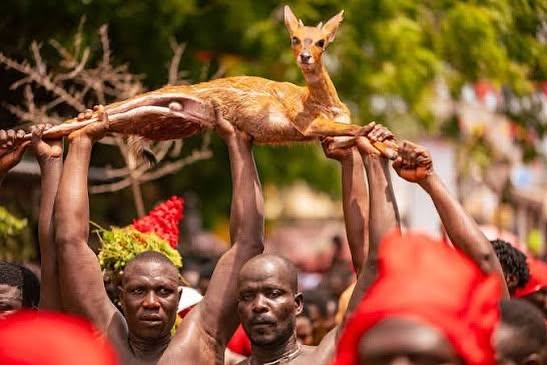
The Aboakyer Festival of the Effutu people in Winneba is one of Ghana’s most dramatic festivals. Its centerpiece is a competition between the town’s two Asafo companies to capture a live deer (or bushbuck) using only their bare hands .
This ancient hunting festival dates back over 300 years. It is rooted in a spiritual covenant between the Effutu state and their deity, Penkye Otu, as the captured deer serves as a sacred offering symbolizing protection, continuity, and communal purification .
What to expect: A thrilling deer hunt, colourful traditional regalia, drumming, and a grand durbar.
Read Also: African Festivals: A complete Guide to Celebrations Across the Continent
3. Damba – Chieftaincy and Community (Northern Region)
When: July/August (Damba lunar month)
Where: Tamale and other towns in Northern Ghana
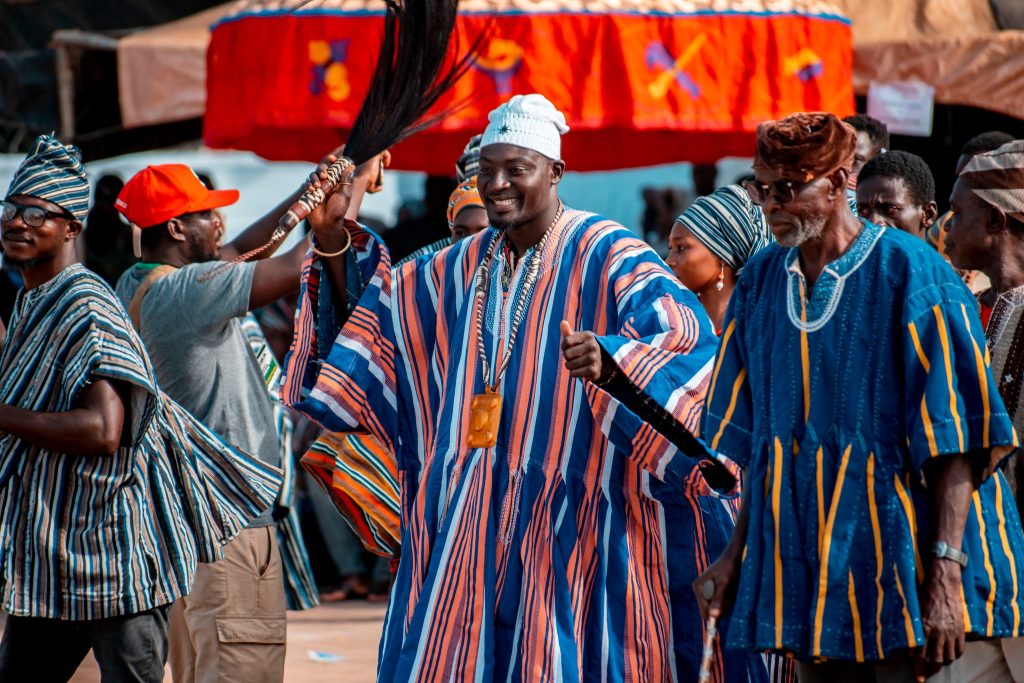
While the Damba Festival is nominally a celebration of the birth and naming of the Prophet Muhammad, it is primarily observed as a celebration of chieftaincy, social cohesion, and communal identity .
The festival involves prayers, fasting, drumming, dancing, and elaborate horse processions that reinforce social hierarchy, loyalty, and cultural continuity . According to the Ghana Museums and Monuments Board, the festival combines Islamic influence with indigenous tradition .
What to expect: Horse riding, drumming, dancing, and vibrant displays of northern Ghanaian culture.
4. Hogbetsotso – The Festival of Exodus (Volta Region)
When: First Saturday in November
Where: Anloga
The Hogbetsotso Festival commemorates the migration of the Anlo people from Notsie (in present-day Togo) to their current home in Ghana . The name itself means “coming from Hogbe” or “festival of exodus” .
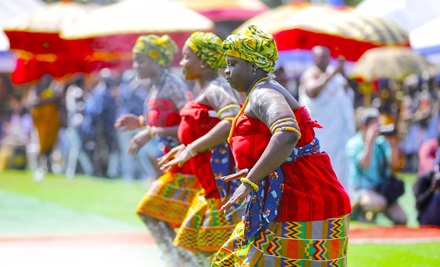
The festival is celebrated in remembrance of the Anlo people’s escape from the tyranny of King Agorkoli of Notsie . It includes grand durbars, colourful processions, and cultural performances that tell the story of their journey and survival .
What to expect: Processions, traditional music, cultural performances, and a celebration of history and identity.
5. Akwasidae – Honoring Ancestors (Ashanti Region)
When: Every six weeks (Akan calendar)
Where: Manhyia Palace, Kumasi
Akwasidae is a deeply significant festival in Ashanti tradition, held every six weeks according to the Akan calendar . It is a time to honor the ancestors and the Asantehene (the Ashanti King), with rituals conducted at the palace .
The festival marks significant agricultural events, promotes unity, and celebrates the Ashanti people’s rich cultural heritage . The last Akwasidae of the year is set aside for Adae Kese, a very important celebration held in the first week of January .
What to expect: Durbar of chiefs, traditional drumming, singing, and rituals honoring the ancestors.
AfricanaWeb Perspective
Festivals in Ghana are far more than colourful tourist attractions — they are living archives of history, identity, and spirituality . They reinforce governance structures, settle disputes, promote unity, and pass down knowledge through the generations. As the Ghana Tourism Authority notes, festivals celebrate resilience, survival, and triumph over hardship . For Ghanaians, they are a reminder that culture is not a relic of the past but a living, breathing part of daily life.