
When people think of ancient African empires, they often think of Egypt. But in West Africa, the Empire of Mali was one of the most powerful and wealthy civilizations in world history. At its peak in the 14th century, it controlled vast gold and salt trade routes, was home to legendary cities like Timbuktu, and was led by rulers whose names still echo across the continent.
The Rise of Mali
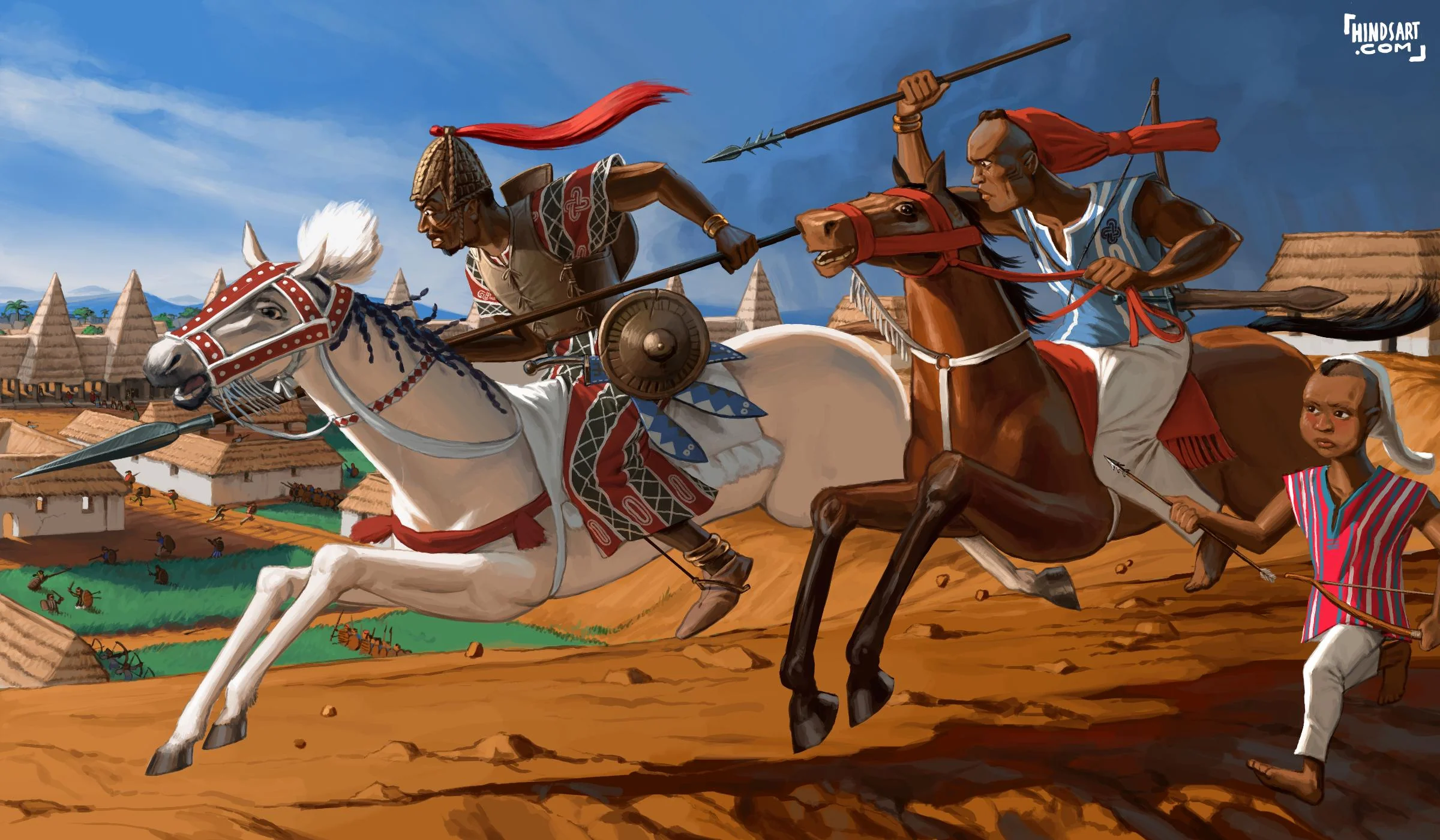
The Mali Empire emerged in the 13th century, following the collapse of the Ghana Empire. Its founder, Sundiata Keita, united the Malinke people and established a kingdom that would grow into a vast empire. Sundiata’s rise to power is legendary—he was a prince who overcame physical disability and exile to defeat the powerful Sosso king, Sumanguru Kante, at the Battle of Kirina in 1235. This victory is immortalized in the Epic of Sundiata, one of West Africa’s greatest oral traditions.
Under Sundiata’s leadership, Mali expanded its territory, controlled key trade routes, and established a system of governance that would last for centuries. He created a centralized state with a council of elders, provincial governors, and a standing army. Sundiata is also credited with introducing the Kouroukan Fouga, a constitution that outlined the rights and responsibilities of citizens, making Mali one of the earliest states in Africa to codify its laws.
Mansa Musa: The Richest Man in History
Mansa Musa, who ruled Mali from 1312 to 1337, is often remembered as the richest person in history. His legendary pilgrimage to Mecca in 1324 put Mali on the world map. He travelled with thousands of attendants and carried so much gold that his journey caused inflation in the regions he passed through—a feat that earned him lasting fame in both the Islamic world and Europe, where cartographers began depicting him on maps holding a golden nugget.
But Mansa Musa was more than just wealthy. He was a builder, a patron of learning, and a ruler who expanded the empire to its greatest extent. He transformed Timbuktu into a centre of Islamic scholarship, attracting scholars, architects, and poets from across the Muslim world. He also commissioned the construction of the famous Djinguereber Mosque, which still stands today as a testament to Mali’s architectural heritage.
Read Also: Today in African History: June 21, 1989 – Albertina Sisulu Addresses London Rally
Timbuktu: A Centre of Learning
Under Mansa Musa’s rule, Timbuktu became one of the world’s great centres of learning. The city was home to the University of Sankore, where scholars studied law, astronomy, mathematics, and medicine. Thousands of manuscripts were produced, covering subjects from science to poetry. The city’s libraries and madrasas attracted scholars from as far as Egypt, Morocco, and Spain, making Timbuktu a cosmopolitan hub of intellectual exchange.
Today, efforts to preserve these manuscripts continue, reminding us of Africa’s rich intellectual heritage. The Timbuktu Manuscripts, many of which date from the 13th to the 16th centuries, cover topics ranging from astronomy and mathematics to medicine and jurisprudence. They are a powerful counter-narrative to the myth that Africa lacked written intellectual traditions before colonialism.
Trade, Gold, and Salt
The wealth of Mali came from its control of trans-Saharan trade routes. Gold from the south—particularly from the Bambuk and Bure regions—was traded for salt from the north, along with textiles, copper, and other goods. The empire’s strategic position allowed it to dominate this trade, bringing immense wealth and influence. Mali’s gold was so abundant that it became the primary source of gold for the Mediterranean and European economies during the Middle Ages.
The empire also traded in kola nuts, ivory, and slaves. However, unlike the later Atlantic slave trade, slavery in Mali was not racialised; enslaved people could rise to positions of influence, and many were freed after serving their terms.
Governance and Administration
The Mali Empire was a well-organized state with a sophisticated administrative system. The emperor, known as the Mansa, governed with the help of a council of ministers and provincial governors. The empire was divided into provinces, each ruled by a farba (governor) who collected taxes, maintained order, and administered justice.
Mali’s legal system was based on Islamic law and local customs, and the empire was known for its relative stability and justice. The Mansa was also a spiritual leader, embodying the connection between the state and the divine.
Decline and Legacy
After Mansa Musa, the Mali Empire began to decline. Internal conflicts, weak rulers, and external pressures from the Songhai Empire and Moroccan invasions all contributed to its fall. By the 17th century, the empire had collapsed, but its legacy endured. The Songhai Empire, which succeeded Mali, inherited much of its territory and administrative structures, carrying forward its traditions of trade, scholarship, and governance.
The stories of its rulers, the wealth of its cities, and the intellectual achievements of Timbuktu remain an essential part of African history. The Mali Empire stands as a testament to the power, sophistication, and resilience of African civilizations—a proof that Africa was home to great kingdoms and complex societies long before colonial narratives took hold.
What We Think
The Empire of Mali is more than a historical footnote. It’s proof that Africa was home to great kingdoms, complex societies, and profound intellectual traditions long before colonial narratives took hold. By telling the story of Mali, we challenge the idea that African history is peripheral. Instead, we centre it — and in doing so, we honour the continent’s past and inspire its future.
Mali is not just a memory; it is a mirror. It reflects the possibilities of African leadership, the power of intellectual and cultural exchange, and the resilience of societies that built and sustained civilizations. It is a story that belongs not just to West Africa, but to the world.