The Seychelles Exile
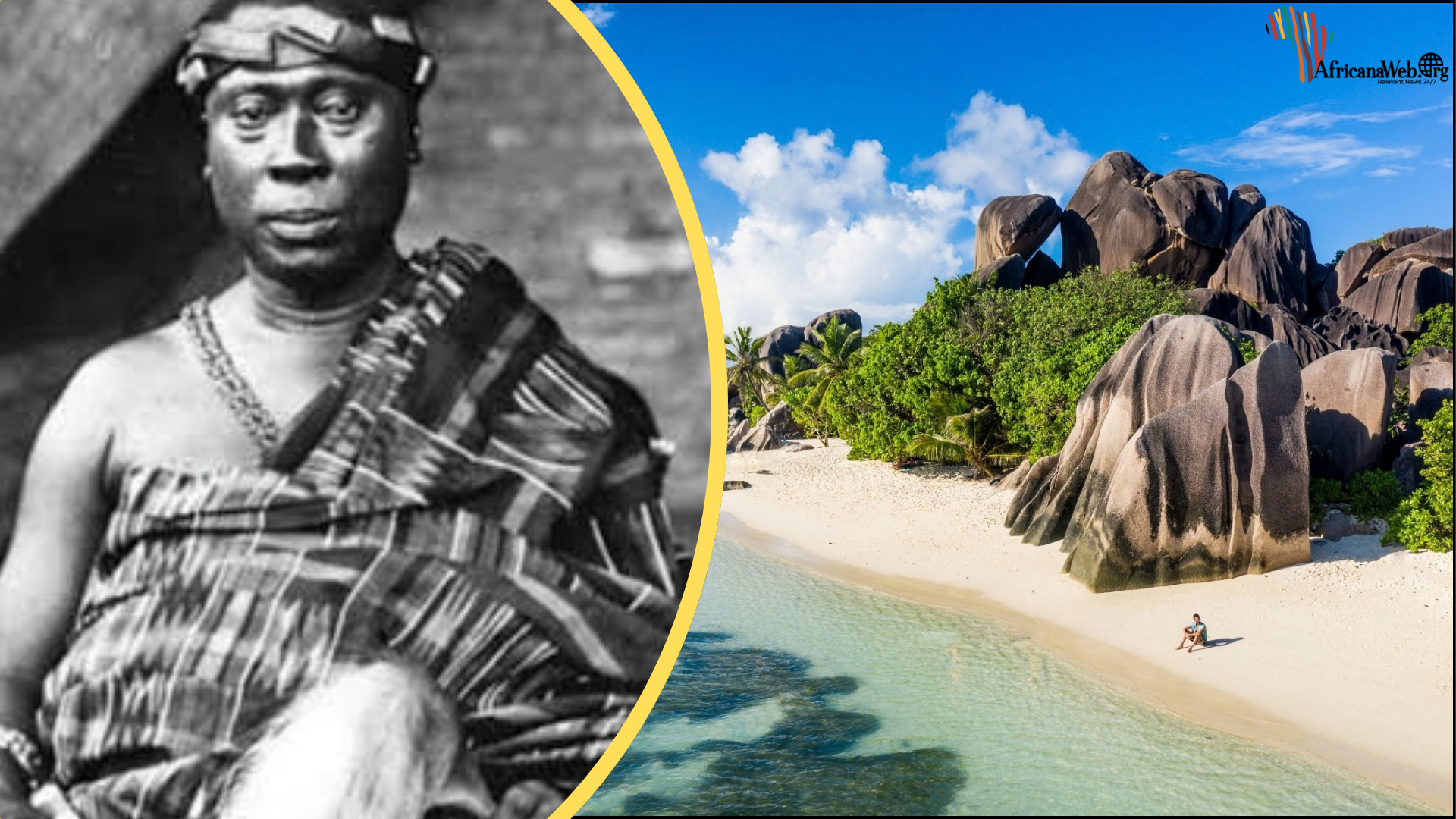
When King Prempeh I of the Asante Kingdom was captured by British forces in 1896, he was not executed. He was not imprisoned in a dungeon. Instead, he was sent to a remote island in the Indian Ocean — so far from home that escape was impossible, yet so comfortable that he could live with dignity.
This was Seychelles: a “prison without bars.” A place where Africa’s monarchs were sent to live out their days in exile, far from their people, their power, and their homeland.
But to understand this story, we must first understand the islands themselves — their colonization, their people, and the monuments that still bear witness to this remarkable history.
The Colonization of Seychelles
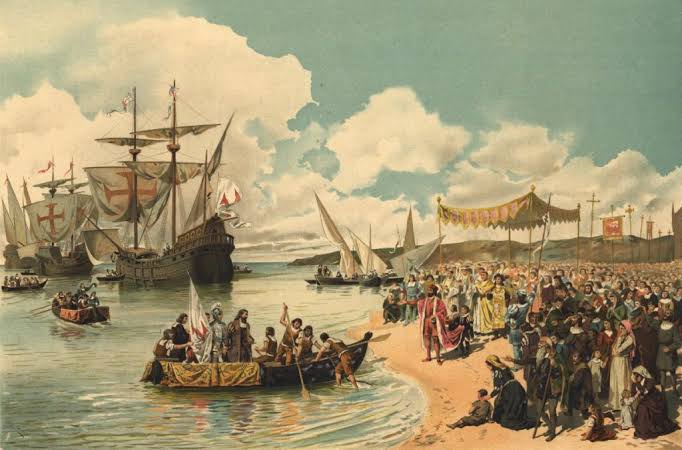
Although the islands appeared on Portuguese maps as early as 1502, they remained uninhabited for centuries . The modern history of Seychelles began with European colonization.
The French Claim and First Settlement (1756–1770)
In 1756, French Captain Corneille Nicholas Morphey took formal possession of the islands for King Louis XV, naming them “Séchelles” in honor of Jean Moreau de Séchelles, the French Minister of Finance .
The first permanent settlement was established on August 27, 1770, when a group of 28 settlers arrived on the ship Télémaque to the island of Ste. Anne . This small group consisted of 15 French men, 7 African slaves, 5 Indians, and 1 woman (of African descent). From this tiny, diverse group, the Creole people of Seychelles were born .
British Rule and a Crown Colony (1814–1976)
During the Napoleonic Wars, Britain took control of the islands in 1811, formally recognized in 1814 by the Treaty of Paris . From 1811 until 1903, Seychelles was administered as a dependency of Mauritius.
A key turning point was the abolition of slavery in 1834, which deprived the islands of their plantation labor force and forced a shift to crops like coconut, vanilla, and cinnamon . In 1903, Seychelles became a separate British Crown Colony. The country gained its independence on June 29, 1976 .
The People and Culture of Seychelles
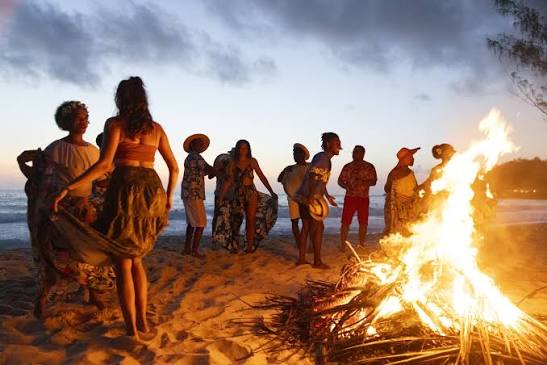
The Seychellois people are a true “melting pot of races,” a Creole nation whose identity was born from the intermingling of settlers and slaves from Europe, Africa, and Asia .
The Creole Identity
The term “Creole” refers to the people, their culture, and their language. The Creole language (Seselwa) is a primary marker of this identity; it is roughly 75% French in its base, with significant influences from Malagasy and African languages, along with a sprinkling of English and Hindi words .
Music and Dance
Seychellois music and dance reflect this fusion. The moutya is a traditional dance with African-influenced drum rhythms, known for recounting the hardship of everyday life — and was once banned by colonial authorities for being too overtly sensual . Sega music is another popular genre that combines African and European influences .
Creole Cuisine
The local cuisine is a delicious fusion of African, Chinese, European, and Indian flavors . Fish curry with coconut rice and Creole fish (a spicy stew) are favorites, while the fruit bat curry is considered a unique delicacy . Rice, introduced by Indians, is a staple, and local fruits like mangoes, papayas, and breadfruit are abundant .
Monuments of History
Seychelles has several landmarks that reflect its colonial past and Creole heritage.
| Monument | Year | Significance |
|---|---|---|
| Victoria Clock Tower | 1901 | Smaller version of London’s Vauxhall Bridge tower; a timestamp of British colonial rule |
| National History Museum | — | Takes visitors through 300+ years of history, including Creole culture, music, and architecture |
| Cathedral of the Immaculate Conception | 1874 | Roman Catholic cathedral in French colonial style |
| L’Union Estate (La Digue) | — | Colonial plantation economy: coconut, vanilla, copra factory, colonial graveyard |
| Kaz Zanana (Pineapple House) | — | Authentic Creole wooden structure over a century old; now a gallery and café |
The Prison Without Bars
This is where the story of Seychelles becomes truly remarkable.
Because of its remote location in the Indian Ocean, the British used Seychelles as a place of exile for political prisoners they could neither execute nor safely leave in their homelands. It was a “prison without bars” — the isolation itself was the punishment.
Le Rocher / “Ashanti Town”
King Prempeh I and his entourage were housed on an old sugar plantation called Le Rocher on the main island of Mahé . The Asante exiles built an enclave there that became known as “Ashanti Town” . The area was surrounded by coconut, mango, breadfruit, orange, and jackfruit trees .
Prempeh himself lived in the estate’s villa. According to Seychellois academic Dr. Penda Choppy, he was given “every respect and dignity” . Officials even complained that the ex-king was living “in too much comfort for an exile” .
The Anglican Church of St Paul’s
Prempeh embraced Christianity during his exile and was baptised in the Anglican Church of St Paul’s . The church became a gathering place for exiles. Prempeh, King Mwanga of Buganda, and King Kabarega of Bunyoro — all exiled African monarchs — would sit together in the congregation .
A project has since been started to reconstruct this church in Seychelles to honour Prempeh’s legacy .
Union Vale Prison (for Chagossians)
Not all exiles in Seychelles were royalty. In the 1970s, Chagossians forcibly removed from the Chagos Archipelago were sent to Seychelles. Those without family connections were taken to live in the old prison at Union Vale . They were left on the docks without means of survival and received no compensation .
Who Was Exiled to Seychelles?
| Figure | Origin | Years in Exile | Notes |
|---|---|---|---|
| King Prempeh I | Asante Kingdom (Ghana) | 1900–1924 | Arrived after British invasion of Kumasi; lived in Ashanti Town |
| Yaa Asantewaa | Asante Kingdom (Ghana) | 1901–died in exile | Queen Mother who led the final resistance to British rule |
| King Kabarega | Bunyoro (Uganda) | 1899–1923 | Captured after rebellion; returned to Uganda in 1923 |
| Kabaka Mwanga | Buganda (Uganda) | 1899–1903 | Died in exile in Seychelles in 1903 |
| Sultan Abdullah of Perak | Malaya | 1877–1895 | First political exile sent to Seychelles under British rule |
| Palestinian Leaders | Palestine | 1937–1939 | Five leaders exiled, including Hussein Fakhri al-Khalidi |
The Legacy Today
The exile of King Prempeh I created an enduring bond between Ghana and Seychelles.
In 2024, Seychelles President Wavel Ramkalawan visited Kumasi to commemorate the 100th anniversary of Prempeh’s return .
Some of Prempeh’s descendants still live in Seychelles. His son James married a Seychellois woman and stayed behind. His great-granddaughter, Princess Mary Prempeh Marimba, works as a nursing supervisor in Victoria, Seychelles .
A twinning programme between Kumasi and Les Mamelles (where Prempeh lived) has been proposed, and work has begun on tourism information boards to mark the historical sites .
The AfricanaWeb Perspective
Seychelles is more than a tropical paradise. It is a place where the story of Africa’s resistance, exile, and survival is written into the very landscape.
The kings who were sent there — Prempeh, Mwanga, Kabarega — did not disappear. They lived, they worshipped, they built communities, and they waited. Some returned home. Some died on those islands. Some left descendants who still call Seychelles home.
“A prison without bars” was meant to erase them from history. Instead, it created a connection between Africa and the Indian Ocean that endures to this day.
It is a story worth telling. And it is one we must not forget.