
The Warrior Queen Who Defied Portuguese Colonialism
When we think of resistance against colonialism in Africa, names like Shaka Zulu and Menelik II often come to mind. But nearly two centuries before the Scramble for Africa, a woman in what is now Angola led a thirty-year war against Portuguese expansion, outmaneuvered European powers, and became a symbol of African sovereignty that still inspires today.
Queen Nzinga (c. 1582–1663) ruled the Mbundu kingdoms of Ndongo and Matamba in the 17th century . A skillful politician and military leader, she defied both Portuguese colonialism and the patriarchal norms of her time, becoming a nationalist icon in Angola, remembered as the “mother of the nation” .
The Early Life of a Future Queen
Nzinga was born around 1582 into the ruling family of Ndongo, a Mbundu kingdom located in the highlands east of Luanda, in what is now Angola . According to tradition, she was born with her umbilical cord wrapped around her neck, which gave her the name Nzinga, a Kimbundu word meaning “to twist” or “to rotate” .
Her father, Mbande a Ngola, ruled a kingdom that had been in near-constant conflict with the Portuguese for decades. The Portuguese had established a base at Luanda in 1575 and were expanding their territory to profit from the transatlantic slave trade . In 1592, Nzinga’s father succeeded her grandfather, and the kingdom’s struggles continued .
When her father was killed in 1617, Nzinga’s brother, Ngola Mbande, seized power. To secure his position, he murdered his rivals and potential challengers to the throne—including Nzinga’s infant son. Nzinga and her sisters were left alive but were sterilized to prevent them from bearing future contenders . Despite this brutality, Nzinga’s political acumen would eventually make her indispensable to her brother .
The Famous Meeting with the Portuguese
Nzinga first entered the historical record in 1622, when her brother sent her to negotiate a peace treaty with the Portuguese governor in Luanda . This meeting gave rise to a famous story.
When Nzinga entered the room, the Portuguese governor was seated in a chair, while she was expected to sit on a mat on the floor, a deliberate insult to her status . Unwilling to accept this, Nzinga gestured to one of her servants, who got down on her hands and knees. Nzinga then sat on her servant’s back, negotiating with the Portuguese governor as an equal .
The negotiations were successful. Nzinga secured a peace treaty and allowed herself to be baptized as a Catholic, taking the Christian name Ana de Sousa . The treaty proved short-lived, as the Portuguese soon broke its terms .
Read Also: The Ancient Ghana Empire: The Forgotten Kingdom That Gave Modern Ghana Its Name
Claiming the Throne and Defending Ndongo
In 1624, Nzinga’s brother died under suspicious circumstances. Nzinga initially became regent for her nephew but soon had him killed, taking the throne for herself . Her rise was contested—the Portuguese supported a rival claimant, Ngola a Hari, and Nzinga had to overcome the tradition that a woman could not rule Ndongo .
By 1626, Portuguese forces and rival claimants had driven Nzinga from Ndongo. She fled with her followers to the Kingdom of Matamba, which she conquered in 1631, using it as a base to continue her war against the Portuguese .
The Great Alliance with the Dutch
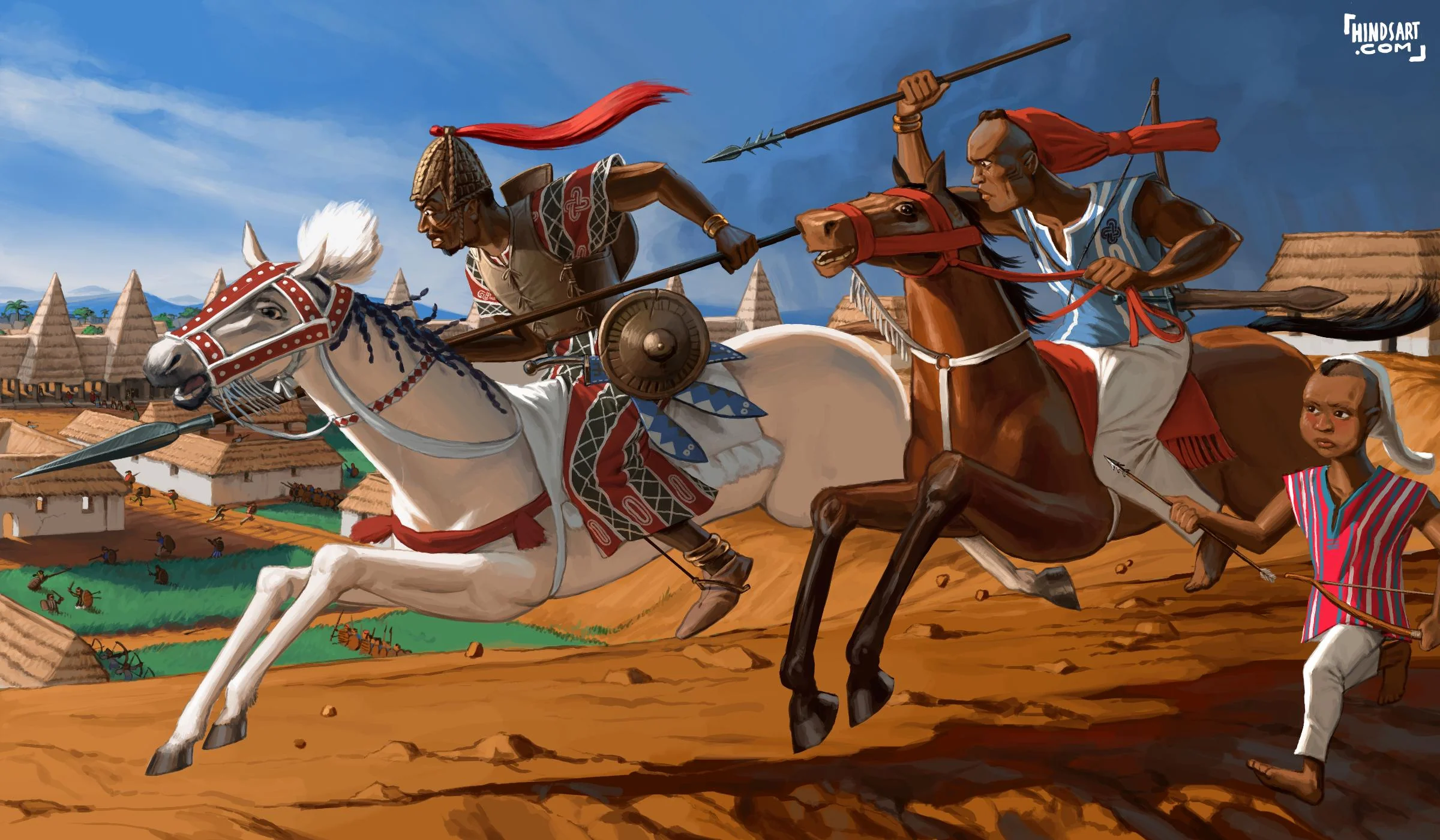
In the 1640s, Nzinga formed an alliance with the Dutch, who were at war with the Portuguese and had captured Luanda in 1641 . This Afro-Dutch alliance, which also included the Kingdom of Kongo, fought to expel the Portuguese from the region. By 1647, the Portuguese presence in Angola was nearly eliminated .
However, the tide turned in 1648 when a Portuguese armada from Brazil arrived to reinforce the beleaguered colonial forces. The Dutch made peace with the Portuguese and abandoned the alliance. Nzinga continued the fight alone for another six years .
The Peace Treaty and Final Years
After years of exhausting war, Nzinga began peace negotiations with the Portuguese in 1654, leading to a treaty in 1656 . The Portuguese recognized Nzinga as the ruler of Matamba and, later, Ndongo, ending her long exile . In exchange, she opened her kingdom to Portuguese trade and agreed to a tribute of slaves. She also re-affirmed her faith in Catholicism .
Queen Nzinga died peacefully in 1663 at the age of 81. She was succeeded by her sister, but the kingdom she had built could not withstand the pressures that followed. Ndongo-Matamba was eventually integrated into the Portuguese colony of Angola in 1671 .
Nzinga’s Enduring Legacy
Queen Nzinga is remembered today as the “mother of Angola” . In the 20th century, the Angolan independence movement adopted her as a nationalist hero, and she remains an inspiration for African feminists .
Her story has experienced a resurgence in popularity in the 21st century, with numerous books and even a Netflix documentary series, African Queens: Njinga, dedicated to her life . She stands as a testament to the courage and intelligence of African leaders who resisted colonial incursion long before the continent was fully subjugated.