
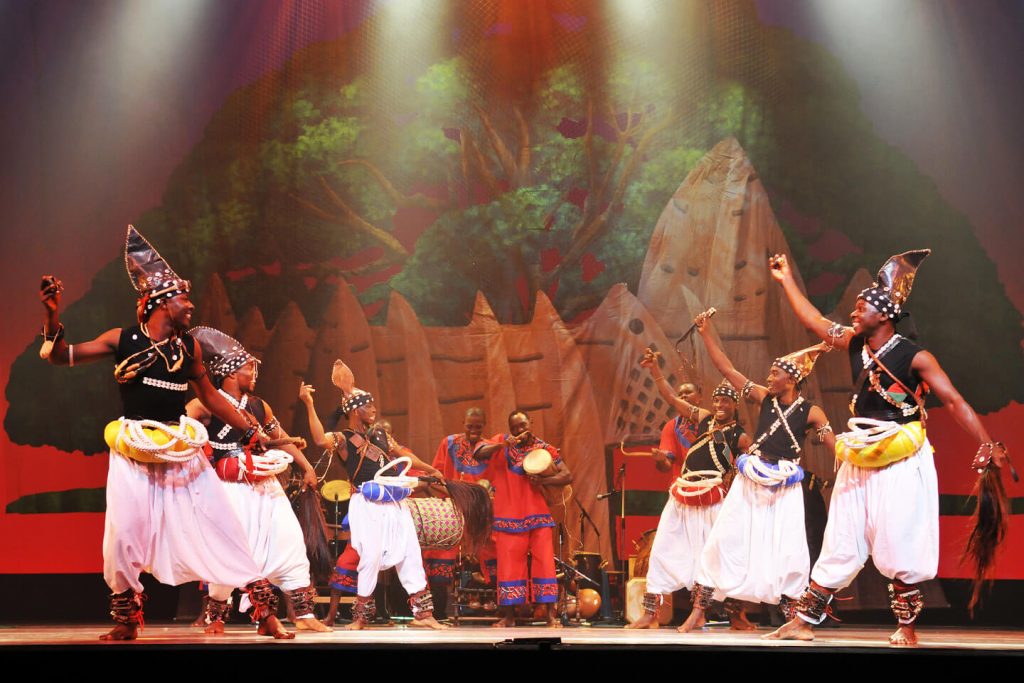
Dance in Ghana is a “universal language” that transcends mere movement. It is a powerful medium for expressing a community’s history, achievements, sorrows, and celebrations. Each of Ghana’s traditional dances are a living archive, woven with the values, struggles, and triumphs of the people.
Here, we explore some of Ghana’s most iconic dances and the rich meanings they carry.
Adowa: The Dance of the Royal Antelope
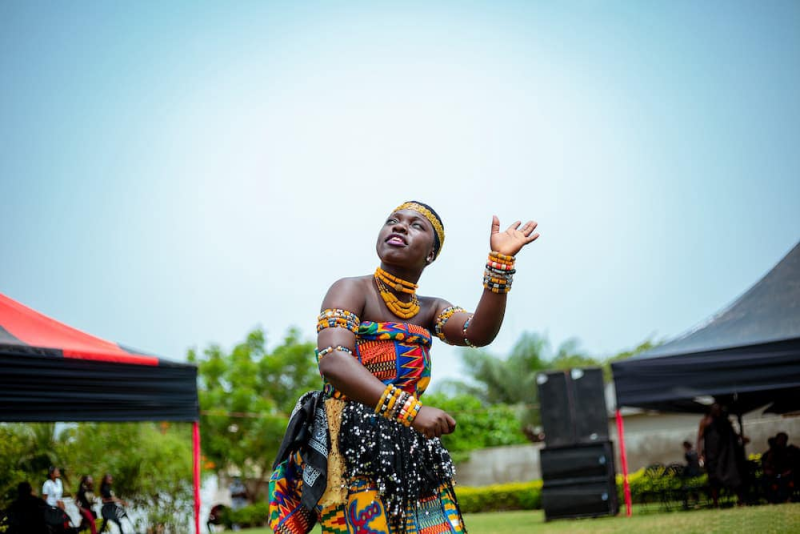
Adowa is one of Ghana’s most widespread and frequently performed dances, originating from the Akan people, particularly the Ashanti. Its name, which means “royal antelope,” comes from the graceful movements of the animal.
Oral history tells of a powerful Ashanti queen mother, Aberewa Tutuwa, who fell gravely ill. A deity was consulted, and it was demanded that a live royal antelope be sacrificed to heal her. When warriors finally found an antelope, they were mesmerized by its beautiful movements. They imitated the antelope’s dance to celebrate the queen’s recovery, thus creating the Adowa dance.
What It Means: The dance is a form of communication where every movement has a purpose. A hand placed over the stomach or the fourth finger in the mouth can signify sorrow, while a dancer’s expressive gestures can be romantic, sarcastic, or joyful. It is a dance that allows individuals to tell their own stories through their body.
Bamaya: A Prayer for Rain
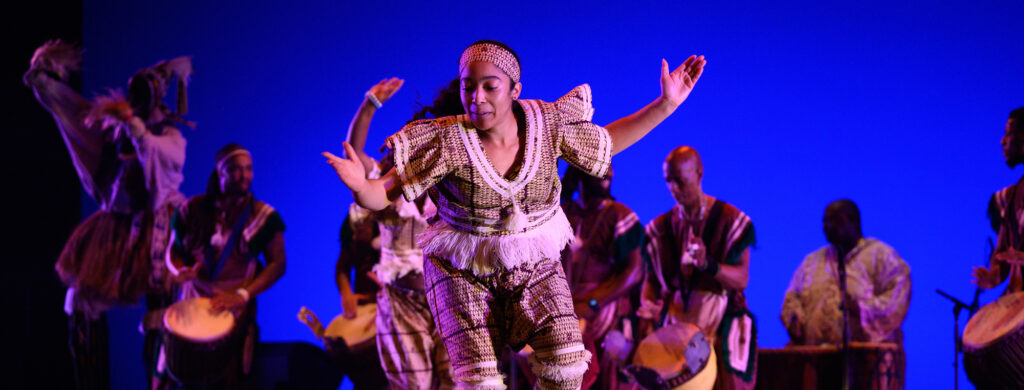
Originating from the Dagbon people of the northern region, Bamaya tells a powerful story of humility and survival.
In the 19th century, the Dagbon State was devastated by a severe drought. Desperate, the chief and elders consulted an oracle, which instructed them to appease the gods by having men dress as women and perform a ritual dance. The name “Bamaya” translates to “the river or valley is wet,” referring to the historic event.
What It Means: This dance symbolizes humility and the extraordinary measures taken to ensure the survival of the community. The men’s act of wearing women’s attire represents a complete surrender to the will of the gods for the greater good.
Read Also: Adinkra Symbols: The Visual Language of the Ashanti People
Kple: The Dance of the Gods
In southeastern Ghana, the Ga people perform Kple, a sacred dance deeply connected to their spirituality.
The Story: Kple is a “holy dance” performed by priestesses of the shrines during the annual Homowo festival. These priestesses, known as Woyei, are believed to be chosen mediums of the gods, acting as interpreters of their messages.
It Meaning: This dance is not for entertainment; it is a communion with the ancestral spirits of the Ga-Dangme people. The chants and rhythms are said to carry the history and migrations of the people, and the dance itself mimics the movements of the gods, creating an “other-worldly aura.”
Borborbor: A Dance of Ewe Identity and Joy
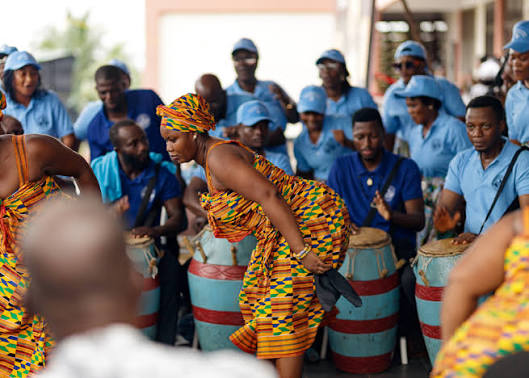
For the Ewe people, who span Ghana and Togo, Borborbor is a vibrant dance of joy and a powerful statement of cultural identity.
The Story: When the Ewe people fled the Notsie Kingdom, they carried the Borborbor tradition with them. It has since become a marker of unity for communities in the Volta Region and beyond. Historically, it was performed as a form of entertainment after a long day of work on the farm.
Meaning: This is a celebration of life, community, and cultural pride. Its energetic circular formations, clapping, and rhythmic drumming solidify the group’s heritage and foster a sense of togetherness.
Kete: The Royal Dance of the Ashanti Kingdom
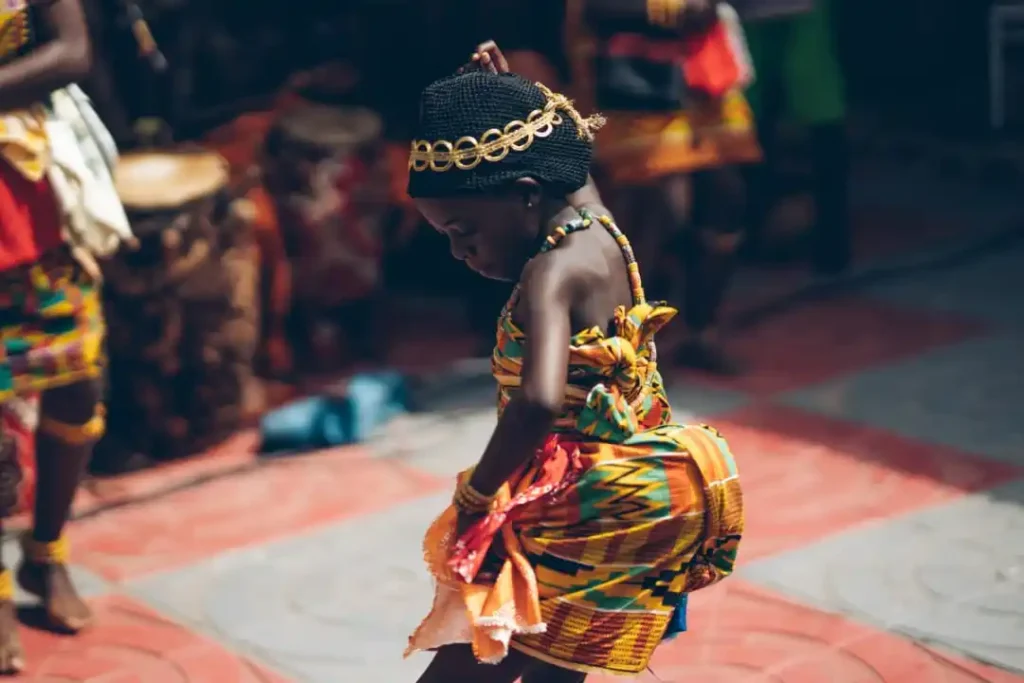
Kete is another prominent dance of the Asante people, traditionally performed exclusively in the royal courts of Kumasi.
The Story: For centuries, Kete was reserved for Ashanti kings and queens as a symbol of royal prestige, spirituality, and cultural identity. In 1963, the Asantehene (the King of the Ashanti) gave permission for the dance to be taught at the University of Ghana, marking its transition to an academic and national symbol.
What It Means: Kete is a “language in itself,” with each movement conveying a specific message or emotion about Ashanti history, spirituality, and societal values. It’s a dance of dignity that reflects intelligent social structuring, where dancers communicate through gestures.
More Dances to Explore
The richness of Ghana’s dance traditions is vast. Here are a few more you could discover:
| Dance | People/Region | Key Meaning |
|---|---|---|
| Kpanlogo | Ga people (Greater Accra) | A lively urban dance born with Ghana’s independence in the 1960s, with roots in leisure dances of Liberian fishermen and religious dances like Kple. |
| Kpatsa | Dangme people | A recreational dance associated with the “limping gait peculiar to dwarfs,” performed by both men and women. |
| Kundum | Ahanta and Nzema people (Western Region) | A warriors’ dance expressing bravery and endurance, now also a harvest festival expressing thankfulness. |
| Sikyi | Ashanti | An infectiously joyful and flirtatious dance created in the 1920s for courtship among the youth, involving strutting and bobbing up and down. |
| Gyewani | Nyamebekyere (Eastern Region) | A music and dance that came into existence “by sheer accident” when a piece of bamboo fell into a river and was struck, creating a new rhythm. |
Our Thoughts
These dances are more than just rhythmic movement; they are cultural archives that preserve history, language, and philosophy. They are stories told with the body, passed down through generations to remind us of who we are and where we come from. As one scholar noted, dance and music are the “sound of our identity”.
When we dance Adowa, we are performing a story of healing and communication. When we dance Bamaya, we are re-enacting the humility of our ancestors. When we dance Kple, we are communing with the spirits that guide us. To understand these dances is to understand the very soul of Ghanaian culture.