The Africa World Cup 2026 controversy has left fans questioning whether the continent’s historic run was stolen. A record nine out of ten African teams advanced to the knockout stage of the 2026 World Cup. It was a moment of pride, a statement of strength, and a promise of more to come.
But the tournament will also be remembered for what could have been.
Egypt’s furious complaint of a “rigged match” against Argentina. Ghana’s clear penalty denied in a crucial draw with England. A growing sense that the continent’s historic run was undermined by decisions that favoured the tournament’s biggest stars.
As icons like Mohamed Salah, Sadio Mané, and Riyad Mahrez bid farewell to the World Cup stage, we look back at the triumphs, the heartbreaks, and the moments that will define this tournament for years to come.
A Historic Achievement for the Continent
The numbers are historic: 90% of Africa’s representatives progressed from the group stage — the highest percentage in World Cup history.
CAF President Dr. Patrice Motsepe hailed the achievement as a landmark moment for African football.
Morocco led the charge, reaching the quarter-finals before falling to France. Egypt made a valiant run to the last 16, pushing Argentina to the brink. DR Congo, returning to the World Cup for the first time in 52 years, earned a creditable round of 32 spot, while debutants Cape Verde became everyone’s second-favourite team.
| Nation | Round Reached | Verdict |
|---|---|---|
| Morocco | Quarter-finals | Solid 7/10; fell to France but maintained high standards |
| Egypt | Round of 16 | 7/10; heroic performance, came minutes from eliminating Argentina |
| Cape Verde | Round of 32 | 8/10; the fairytale story of the tournament |
| DR Congo | Round of 32 | 7/10; historic first win in 52 years |
| South Africa | Round of 32 | 7/10; reached the knockout stage for the first time |
| Ghana | Round of 32 | 6/10; defensive solidity but exited with a whimper |
| Ivory Coast | Round of 32 | 6/10; promising young side but fell to Norway |
| Algeria | Round of 32 | 5/10; underachieved, limped out against Switzerland |
| Senegal | Round of 32 | 5/10; chaotic campaign, threw away 2-0 lead against Belgium |
| Tunisia | Group Stage | 2/10; the only side to fail to progress |
“A Rigged Match”: Egypt’s Outrage
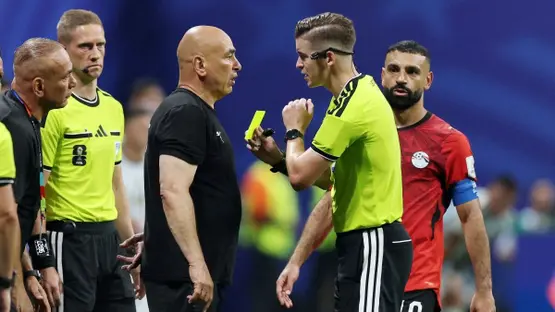
While the results speak for themselves, a persistent narrative of unfair officiating overshadowed the tournament. The Africa World Cup 2026 controversy reached its peak when Egypt filed a complaint against Argentina.
Egypt, leading 2-0, fell to a late Argentina comeback. The anger, however, was directed at the referee, François Letexier of France. The Egyptian Football Association (EFA) filed an official complaint to FIFA, demanding an investigation and the removal of the officiating crew.
Manager Hossam Hassan was scathing, telling the press the match was “clearly a rigged match” and that his team had been “cheated unfairly.”
The Egyptians felt two key decisions went against them:
-
A goal by Mostafa Zico that would have made it 2-0 was disallowed after a VAR review penalised Marwan Attia for a slight foul on Lisandro Martinez at the start of the move.
-
A potential penalty for a foul on Mohamed Salah in the Argentina box was not awarded, seconds before Enzo Fernandez scored the 92nd-minute winner.
Hassan implied a conspiracy to keep Argentina and Lionel Messi in the competition: “Perhaps they wanted to keep the world champion in the competition. Perhaps they wanted Messi to stay in the running.”
Read Also: Africa Took Over the World Cup with Electrifying Performances from Burna Boy, Rema, and Tyla
The Refereeing Chief Responds
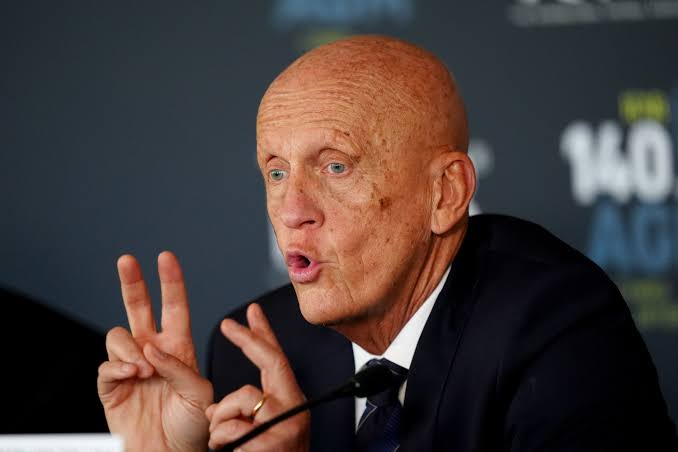
FIFA’s Head of Referees, Pierluigi Collina, defended the decisions. He argued the foul on Martinez was clear and part of the same attacking phase, while the collision with Salah was deemed a “normal, natural collision” by the VAR, not a penalty.
Collina explicitly denied any favouritism: “There is no question of us favouring Argentina to eliminate Egypt… World Cup referees [are not] influenced by any party.”
The dismissal of the complaint is, however, a reminder of how difficult it is to overturn such decisions. Protests rarely lead to any change.
A Cloud of Suspicion?
This was not an isolated incident. Egypt’s frustration reflects a broader sentiment — even if unfounded — that the tournament’s biggest stars receive preferential treatment. Ghana also felt aggrieved by the decision not to award them a “clear penalty” in their crucial 0-0 draw with England.
What Africa Lacked: The Missing Edge
Despite the historic achievement, Africa’s campaign laid bare familiar weaknesses that prevented a deeper run:
-
Lack of Clinical Finishing: African teams created chances but often failed to convert them. Egypt dominated possession against Argentina for long stretches but couldn’t kill the game.
-
Defensive Lapses at Critical Moments: South Africa’s red card against Mexico, Senegal’s collapse against Belgium, and Ghana’s inability to hold off Colombia all pointed to lapses in concentration.
-
Inexperience at This Level: For debutants like Cape Verde and DR Congo (returning after 52 years), the knockout stage brought a learning curve that proved too steep.
-
Depth of Squad: When key players were injured or suspended, many African teams lacked the quality to replace them.
-
Questionable Refereeing: While not an excuse, the perception of bias — whether real or imagined — affected team morale and public confidence.
The Last Dance: Africa’s Icons Bow Out
The 2026 World Cup marked the final international chapter for a golden generation of African talent.
| Player | Nation | Legacy |
|---|---|---|
| Sadio Mané | Senegal | Premier League & Champions League winner; Senegal’s all-time top scorer with 52 goals in 124 caps. He has stated he will not compete in the 2027 AFCON. |
| Mohamed Salah | Egypt | Liverpool legend; Egypt’s talisman and record goalscorer; desperate to lead his country on one final deep World Cup run. |
| Riyad Mahrez | Algeria | Former Manchester City star; Algeria’s captain and record appearance holder with 38 goals in 110+ games. |
| Kalidou Koulibaly | Senegal | Backbone of the Senegalese defence for over a decade; played every minute of their last seven World Cup matches. |
| Aïssa Mand | Algeria | The 34-year-old center-back retired after Algeria’s match against Switzerland. He bows out as the most-capped player in Algerian football history with 122 appearances |
Likely Retirees
Other key players who may also have played their final World Cup match include:
-
Cédric Bakambu (DR Congo)
-
Jean-Michaël Séri (Ivory Coast)
-
Wilfried Zaha (Ivory Coast)
-
Jordan Ayew (Ghana)
- Thomas Partey (Ghana)
From Our Perspective
Africa’s performance at the 2026 World Cup is a story of monumental progress clouded by the ghosts of controversy. The achievement of nine teams in the knockout stage is a testament to the continent’s growing footballing power and a source of immense pride.
Yet, the feeling of injustice — particularly for Egypt — has left a bitter taste and reignited debates about the integrity of officiating at the highest level.
As a new generation of talent emerges, the departure of icons like Mané, Salah, and Mahrez marks the end of a defining era. Their legacy, however, is a foundation on which future African stars can build.
The challenge for CAF and FIFA is to ensure that on the world’s biggest stage, African teams are judged solely on their football, not by the decisions of the officials. The success is clear; the potential for more is undeniable.