
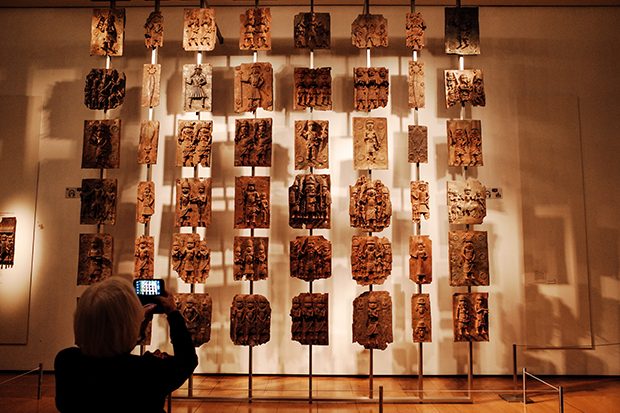
They are among the most magnificent examples of African art ever created—intricate brass plaques, royal commemorative heads, and ceremonial objects that once adorned the palace of the Oba of Benin. Today, they are scattered across museums in Europe and America, thousands of miles from their homeland. This is the story of the Benin Bronzes: their creation, their violent theft, and the long struggle to bring them home.
What Are the Benin Bronzes?
The ‘Benin Bronzes’ are a group of sculptures that include elaborately decorated cast relief plaques, commemorative heads, animal and human figures, items of royal regalia, and personal ornaments . Created from at least the 1500s onwards in the West African Kingdom of Benin (in what is now Nigeria), they were crafted by a specialist guild working for the royal court of the Oba (king) in Benin City .
The term “Benin Bronzes” is somewhat misleading. Many of the objects are actually made of brass, while others were created from ivory, wood, leather, coral, and textiles . The Kingdom of Benin also supported guilds working in these other materials, and the term is sometimes used to refer to historic objects produced using these media as well .
Many pieces were commissioned specifically for the ancestral altars of past Obas and Queen Mothers. They were also used in other rituals to honour the ancestors and to validate the accession of a new Oba . Among the most well-known are the cast brass plaques which once decorated the Benin Royal Palace. These provide an important historical record of the Kingdom of Benin, including both its dynastic and social history, and offer insights into its relationships with neighbouring kingdoms and societies .
A Glimpse of Benin’s Royal Art
| Type of Artifact | Material | Purpose |
|---|---|---|
| Cast brass plaques | Brass | Decorated royal palace; recorded historical events |
| Commemorative heads | Brass, ivory | Honoured Obas and Queen Mothers on ancestral altars |
| Royal regalia | Ivory, coral | Ceremonial and symbolic functions |
| Figurative sculptures | Brass, wood, ivory | Depicted court life, rituals, and relationships |
The 1897 Punitive Expedition: How the Bronzes Were Looted
The Benin Bronzes came to the British Museum as a direct result of a brutal colonial expedition. By the end of the 1800s, British power in the region was expanding. In January 1897, a British trade mission was attacked on its way to Benin City, leading to the deaths of seven British delegates and 230 African carriers .
This incident triggered a large-scale retaliatory military expedition by the British against the Kingdom of Benin. In February 1897, Benin City was captured by British forces . The British occupation was devastating and bloody. Along with other buildings, the Oba’s palace was burned and partly destroyed. Its shrines and associated compounds were looted by British forces, and thousands of objects of ceremonial and ritual value were taken to the UK as official ‘spoils of war’ or distributed among members of the expedition according to their rank .
These included objects removed from royal ancestral shrines, among which were commemorative brass heads of former Obas and associated carved ivory tusks. The looted objects also included more than 900 brass relief plaques, probably dating between 1500–mid-1600s, found in a storage room within the palace . Following the occupation, the Oba was captured and sent into exile, while several Benin chiefs were executed. This brutal colonial episode effectively marked the end of the independent Kingdom of Benin .
In the autumn of 1897, the British Museum displayed 304 Benin plaques on loan from the Secretary of State for Foreign Affairs and subsequently petitioned successfully to receive 203 of these as a donation. Most of the remaining plaques were sold to UK and German museums and to private dealers .
Read Also: The Stories Behind Ghana’s Traditional Dances- From Adowa Of The Akans To The Ewe’s Borborbor.
The Repatriation Movement: A Long Road Home
The call for the return of the Benin Bronzes is part of a broader movement for the repatriation of cultural heritage taken during the colonial era. The dictionary definition of ‘repatriation’ is to “send (someone) back to their own country, or send or bring back to one’s own country” .
Repatriation is a political move: former colonies claim their heritage back, reversing the trends set by colonial power relations . It is a matter of social justice through reparation, reconciliation, and healing . As defined, repatriation represents the process where an artifact returns to its original place, be it a country, region, city, or village .
The AfricanaWeb Perspective
The story of the Benin Bronzes is not just about art—it is about history, power, and justice. It is a story of how African cultural heritage was violently looted and dispersed across the world, and how a continent is demanding its return. These artifacts are not just objects; they are a link to the past, a symbol of identity, and a testament to the sophistication of African civilisations.
The fight for repatriation is a fight for dignity and recognition. As the British Museum itself notes, the Benin Bronzes sit within a wider landscape of early West African cast brass traditions, dating back into the medieval period . It is time for these treasures to return to their rightful home.