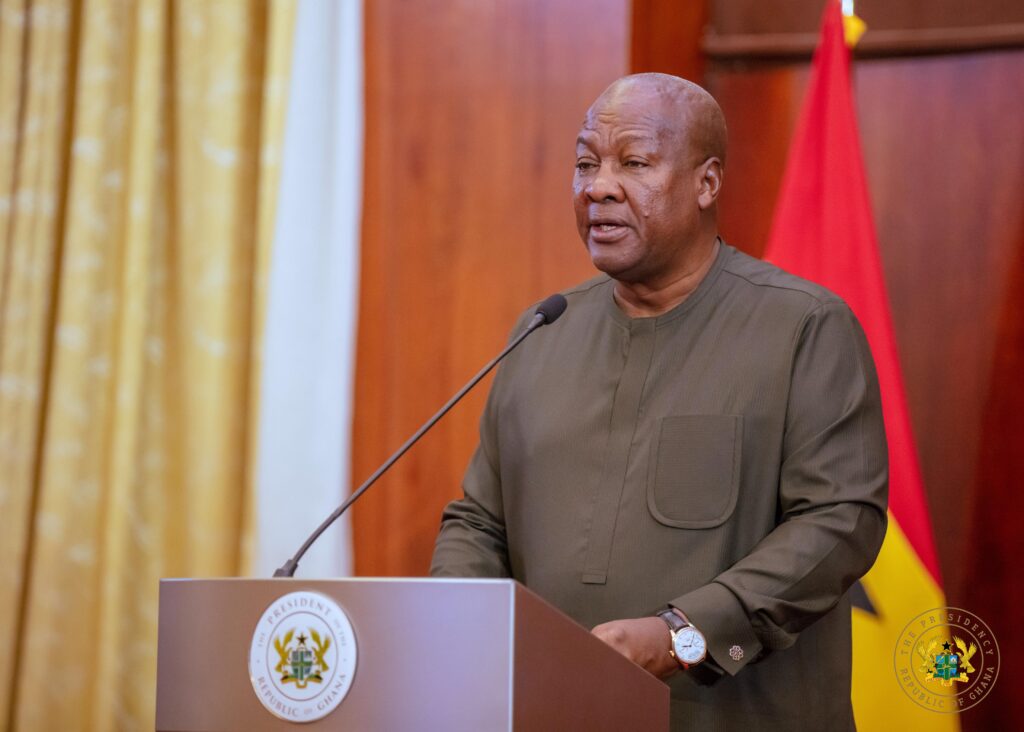
During the 12th Africa Debate in London on June 3, Ghana’s President John Dramani Mahama delivered a clear message: Ghana is open for business. Addressing global investors, he laid out a vision for what the continent truly needs — stating that Africa is no longer seeking sympathy, but rather fair, strategic, and mutually beneficial partnerships that support sustainable development and shared prosperity.
The Long Standing Relation Between Africa And Other Nations
For centuries, Africa has served primarily as a supplier of raw materials for the industrialisation of other nations. That era, Mahama argued, must give way to a more balanced relationship — one centred on value addition, industrialisation, technology transfer, and infrastructure development.
“Africa does not seek sympathy,” he said. “Africa seeks partnerships — fair partnerships, strategic partnerships, and mutually beneficial partnerships.”
“The era in which Africa served merely as a source of raw material for other nations’ industrialisation must end,” he added.
President Mahama argued that the future relationship between Africa and the world must be built on value addition, industrialisation, technology transfer, infrastructure investment, skills development, and shared prosperity.
Turning to Ghana’s economic progress, he noted that the country has implemented disciplined macroeconomic reforms over the past 18 months — resulting in improved fiscal stability and stronger investor sentiment. Inflation has declined significantly, the cedi has regained stability, the country’s fiscal position has improved, and international reserves have strengthened.
Read Also: Ghanaian Creative Willard Bill to Showcase Culture at 2026 World Cup Fan Activations in USA
Mahama also pointed to positive assessments from international credit rating agencies and a growing appetite among investors as clear signs that confidence in the Ghanaian economy is returning.
“Today, Ghana is witnessing renewed growth and improved investor confidence,” he stated.
He emphasized that the country’s recovery extends beyond statistical improvements — reflecting deeper structural reforms aimed at repositioning Ghana as a productive and competitive economy. Government efforts, he said, are focused on industrialisation, agro-processing, export expansion, logistics, digital transformation, and value addition across key sectors.
How Ghana And Africa As A Whole Is Reshaping For Stability
The President further highlighted Ghana’s political stability, democratic credentials, and strategic location within West Africa as major advantages for businesses seeking opportunities on the continent.
“For investors gathered here today, Ghana offers political stability, democratic continuity, strategic geographical access to the West African sub-region, and a government that is committed to reform and private sector growth,” he said.
Reaffirming his administration’s commitment to creating a conducive environment for investment, Mahama delivered a direct message to the international business community:
“The message I bring to investors today is simple: Ghana is open for business.”
The President’s remarks form part of the government’s broader efforts to attract foreign direct investment, expand industrial activity, and accelerate economic growth as Ghana charts its recovery and transformation agenda.
Our Opinion On President Mahama’s Message To Global Investors
President Mahama’s speech wasn’t just about Ghana. It was a statement about Africa’s place in the global economy. For decades, the continent has been viewed primarily as a source of raw materials. But leaders across Africa are increasingly demanding a new relationship — one based on manufacturing, technology, and fair trade.
For Ghana specifically, the message is clear: the country has stabilized its economy and is now ready for investment. Whether in agro-processing, digital infrastructure, or logistics, Mahama’s government is positioning Ghana as a competitive destination for foreign capital.
For AfricanaWeb, this story matters because it challenges the old narrative of Africa as a passive recipient of aid. Instead, it presents African leadership as proactive, strategic, and focused on mutual benefit.